










Burning from the Inside
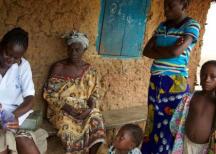
Burning from the Inside is an interview documentary with several members of a Nigerian Ijaw ethnic group, of which several million are living in the oil-rich region of the Niger Delta.
Nigeria is the world's sixth largest exporter of crude oil, holds the fourth largest reserve of oil and gas and is an important supplier of oil to the US. Since the British left Nigeria in the 1960s the country has been in a state of semi-civil war, wracked by religious conflicts, and its natural resources looted by western companies, as a result of which millions of people have died.
The people interviewed in this film have all suffered horrendous violence in their struggle for independence. Some have been on death row, some raped, some kidnapped and even tortured. Off camera they are quite willing to talk but on camera they were too scared because of possible repercussions.
The project started in January 1999 and ended by September 2004, during which time the media had changed their general mood by describing the situation of 'gangs, local tribes and the oil companies in conflict' as 'armed militants and guerrillas against the government in a war zone'.
The documentary deals with all aspects of human rights from child abuse, women, the status of gays and lesbians, the environmental problems and the struggle for a common identity.
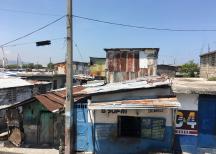
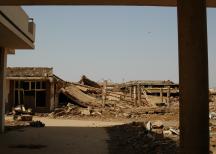
During the five years it took me to assemble this feature-documentary in "cinematic black and white", I've discovered that the infrastructure so badly needed like hospitals, roads or schools is still a figment of the imagination. The change of government with all the big words and promises failed to live up to its momentum.
Some of those featured in the film
Oronto Douglas is Nigeria's leading environmental human rights lawyer. He is deputy director of Environmental Rights Action/Friends of the Earth, Nigeria, and has been a visiting lecturer and speaker at community-organized events, international conferences, and universities all over the world. Douglas was a member of the legal team that represented Ken Saro-Wiwa before he was executed by the Nigerian military junta in November 1995.
He received degrees in law from the University of Science and Technology, Port Harcourt, Nigeria, and De Montford, Leicester, England. His articles and speeches have been published in books, journals, and magazines in Nigeria, Europe and the United States. His recent book: "Where Vultures Feast, Shell, Human Rights, and Oil in the Niger Delta" has been published by Random House. He is now the Commissioner for Information, Culture, Tourism and Strategy for Bayelsa state in Nigeria.
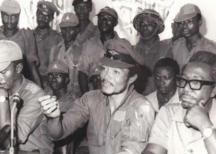
Chief(Captain) Samuel Owonaru (Rtd) was a chief of staff of the Niger Delta volunteer force in 1966. He was arrested and tried by the Nigerian government and sentenced to death. He was in prison waiting execution for a few months until a counter coup brought General Gowon to power and released him from jail.
Between 1967-1970 Samuel Owonaru was a captain in the Nigerian army. He fought on the side of the Federal government against the separatists for the Biafra State. He sustained a serious injury during the Civil War and was left wheelchair bound.
Sokari Ekine is a human rights activist, researcher and educationalist. She is a founding member of the Niger Delta Women for Justice, a non-governmental organisation based in the Niger Delta region of Nigeria and is presently their European representative. Ms Ekine is the author of "Blood and Oil: Testimonies of Violence from Women of the Niger Delta”. She has also written a number of essays on gender violence and oil exploration in the Niger Delta.
Sokari runs her own website:
Ibiba Don Pedro is a Nigerian journalist. In 2003 she won the CNN African journalist of the year award. She also won the Reuters-IUCN media Award 2000 (English-speaking Africa) for excellence in environmental reporting in Amman, Jordan. Ibiba DonPedro completed a Master degree in Mass Communications at the University of Leicester, UK in 2002/2003. She holds a BA (Hons) degree in English from the University of Jos, Nigeria. She is currently working on a book, “Trapped in the Barrel”, an investigative exploration of the consequences of oil production on women in the oil producing communities.
Rowland Ekperi is the President of the Ijaw People's Association of Great Britain and Ireland. He has been working tirelessly over several years to ensure that the story of the Ijaw people and their fellow Niger Deltans is not forgotten.
Felix Tuodolo is President Emeritus of the Ijaw Youth Council, an organisation often accused of kidnapping oil workers and their families. He was one of the principal signatories to the famous Kaiama Declaration of December 11, 1998.
As for myself, I’m Nick Peterson a white British film-maker, writer and music composer. I have never worked on a documentary before. I have only directed thrillers, comedies and MTV style video-clips. No one wanted me to direct this documentary and no distributors wanted to back this project arguing that it was doomed from the start. Most of my friends -even African ones- urged me to stay away from African politics arguing that it is a very dangerous affair. I think they were all right up to a point. It's never easy to find the truth anywhere so I just limited the story to a portrait-interview. The narrative is driven by the text displayed on the screen and the narrator depicting the story of the struggle for independence. Eventually I had to add my own voice to it, in order to introduce the characters and to explain the situation surrounding the making of this film.
I'm glad I've kept working on this project for so long even though it seems extremely surreal to try and understand what is true and what isn't, what is real and what isn't.
Nick Peterson, October 2005.
* Nick Peterson expects the documentary to be available online within the next two months. DVDs will also be available soon. Contact Nick at [email][email protected]
- Log in to post comments
- 1549 reads
Author

Anonymous (not verified)