
















John Christensen comments on the issue of capital flight and tax avoidance, a massive drain on African’s resources. In the face of a reluctance by international organisations to address the issue, and the weakness of national efforts in the face of global capital, civil society will have a vital role to play in pushing for change.
Last month two global meetings painted two very different portraits of Africa. In the luxury Swiss holiday resort of Davos, shielded by a ring of steel fences and security forces, finance ministers, corporate executives and assorted celebrities gathered at the World Economic Forum. They talked vaguely about the responsibility to bolster aid and reduce the debt of African nations. The Africa portrayed at Davos was an indebted, broken continent whose impoverishment can only be solved by the generosity of donors in the North.
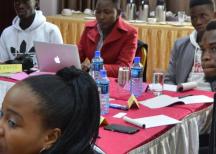
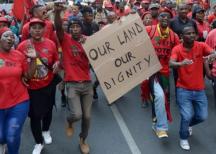
Four thousand kilometers away, civil society groups from Africa and beyond came together in the Malian capital of Bamako for the African leg of the World Social Forum, a vibrant grassroots alternative to the suits and platitudes of Davos. Five days of meetings addressed alternative solutions to poverty and disease across the global South. In these meetings a different Africa emerged: a region not simply in need of external resources, but with immense wealth potential of its own, being drained at an ever increasing rate with the collusion of the world's wealthiest countries and companies.
This was the message of the Tax Justice Network (TJN), an international coalition of researchers and campaigners who spoke at packed meetings in Bamako on capital flight and tax avoidance. The remarkable interest in these ordinarily dry topics shows how tax is emerging as an overlooked but central issue in the fight against poverty. The figures speak for themselves: TJN's own research estimates that a staggering $11.5 trillion has been siphoned 'offshore' by wealthy individuals, held in tax havens where they are shielded from contributing to government revenues. The benefits from taxing this wealth would far outweigh any realistic amount of foreign aid from those countries. If the income from this offshore wealth was taxed at the moderate rate of 30%, the resulting revenue - around $255 billion annually - could finance the United Nations Millennium Project in its entirety. Put simply, making the rich pay their due taxes could immediately fund measures to halve world poverty.
In common with the rest of the developing world, Africa suffers particularly acutely from this wealth drain. Around 30% of sub-Saharan Africa's GDP is moved offshore. As several studies have suggested, this rate of capital flight means that Africa - a continent we are continually told is irrevocably indebted - may actually be a net creditor to the rest of the world. Whilst Africa's wealth flows to Monaco, Switzerland, Jersey and London, those who lose out are the populations of African nations whose dwindling tax revenues cannot support government spending on health, AIDS programmes, education, infrastructure and communication. Meanwhile the banking secrecy maintained by the world's bankers and accountants in tax havens helps business and political elites to plunder resources across the continent, providing a secure cover for them to launder the proceeds of political corruption, fraud, embezzlement and illicit arms trading.
Astonishingly, international organisations including the World Trade Organisation and the International Monetary Fund have not pursued international action to stem the hemorrhaging of Africa's wealth. Instead, they have encouraged developing African nations to drop business and trade taxes further, in a desperate bid to encourage investment from multinational corporations accustomed to channeling their wealth through tax havens. The result is that ordinary people shoulder more of the tax burden through sales taxes, while homegrown national businesses cannot compete with giant international corporations which can avoid tax through the international movement of capital and assets.
National initiatives are beginning to work against this African plunder. Nigeria's heroic Economic and Financial Crimes Commission is working to recover some of the wealth lost to tax havens through corruption and the tax evasion of multinational oil companies. And last November, South Africa's Finance Minister Trevor Manuel, called for wider measures against multinationals' aggressive tax avoidance.
But national initiatives alone are weak in the face of mobile, global capital. International cooperation on tax is urgently necessary - and if international institutions like the UN and the OECD will not take action, global civil society must force them to do so. Bamako saw a bold proposal: to form a continent-wide Tax Justice Network for Africa, to be launched at the 2007 World Social Forum in Nairobi, Kenya. This will be a major step in a new global development struggle, at whose forefront should be African activists and campaigners.
Davos and Bamako are worlds apart. Uniting them, though, is not just philanthropic promises over debt and aid, but a global theft which sees vast African wealth secreted away in bank accounts and offshore trusts in Switzerland and beyond. Stopping that theft, and taxing it for the benefit of African populations, will go a long way towards ending the poverty of Mali and its neighbours.
* John Christensen, is the director of the Tax Justice Network's International Secretariat. He is a development economist and former economic adviser to the UK and Jersey governments.
* Please send comments to [email protected]
- Log in to post comments
- 1274 reads
Author

Anonymous (not verified)