














Koni Benson from the International Labour Research and Information Group in Cape Town argues that contrary to stereotypes in the South African mainstream media, there is solidarity and a common agenda between South Africa's poor, and asylum seekers and migrants in the region, notably from Zimbabwe, and amongst women's groups, with roots in the liberation struggles.
The dominant story in the mainstream press in South Africa is that the South African poor act out of desperation when migrants and refugees are violently attacked. That the 'problem' is competition for scarce resources and that SA must first get its house in order, and solve the poverty crisis; and then desperate South Africans will stop lashing out at desperate asylum seekers.
This story of displaced frustration and resentment does not fairly represent the range of opinions, and even more importantly, the organised actions of the poor and working class in South Africa who invest precious resources in directly supporting refugees and migrants, especially in the case of Zimbabweans right now.
In fact, new research is showing that while xenaphobia is rampant and often played out amongst the poor in South Africa, it is also precisely some of the poorest South Africans living in shack and townships who have been most sympathetic to the struggles of Zimbabweans worst affected by the current crisis.
South African movements of the working class have mobilised around the politics playing out in Zimbabwe right now. In fact, the issue of Zimbabwe has captured the attention and has been prioritised by grassroots activists in South Africa. These are groups of people, many of whom are unemployed, and struggle with the challenge of solidarity within the same neighborhoods and the same city to fight for basic survival like water, housing, electricity, and health care. Yet they are taking a stand about Zimbabwe. Why?
This support is not only forthcoming out of sympathy for the hardships inflicted by the power wars of Mugabe and the like, but rooted in the belief that, like during repression of activism during the liberation struggle in South Africa, international solidarity is decisive right now for Zimbabweans who are resisting an 'elite transition', which will not change the structures of inequality in any meaningful way for the poor.
At the recent 'Towards an Africa Without Borders' conference in Durban, one Bulawayo debt cancellation activist argued for solidarity between the poor in South Africa and in Zimbabwe, because our interests are in the same pot. South African activists at the conference likewise argued that 'we see our problem as rooted in poverty and elite deal-making, which sees no international boundaries'. In this view, President Mbeki and his SADC counterparts will not act against the Mugabe regime in defence of the Zimbabwean people. Rather, they are angling for an 'elite transition' similar to the ones in South Africa, Namibia, Nigeria and the Democratic Republic of Congo (DRC), where those who have the backing of the rich and powerful, work out among themselves how to divide the power and money. From this perspective, the majority of the people are excluded from the process, and, inevitably, the resulting system leaves them at the mercy of the oppressors and exploiters and trapped in the associated poverty and social crises.
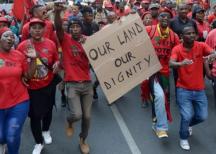
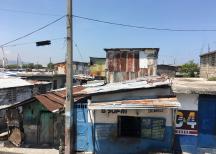
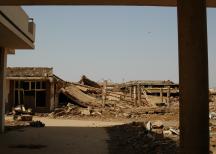
With this motivation to mobilise, over 2,500 people come out in protest in Durban to criticise the Mugabe regime. Abahlali baseMjondolo has hosted members of the Combined Harare Residents' Association (CHRA) in shack settlements, worked with the Zimbabwe Crisis Coalition, and written comparisons of Murambatsvina and shack demolitions in South Africa. In Cape Town, People Against Suppression and Oppression of People (PASSOP) have held regular pickets. The Treatment Action Campaign (TAC) and the Social Movements Indaba have appointed Africa desks to better address the issues. These movements have an impressively clearly defined 'enemy', and it is not displaced Zimbabweans crossing the border in search of survival.
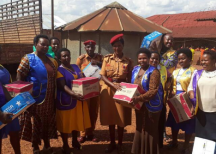
In Cape Town, for example, women from a range of grassroots organisations from seasonal women farm workers, to refugee women, to anti-eviction activists, to unionists, to wellness centre organisers came together after the violent attacks on women activists in Zimbabwe in March, to analyse the relationship between state and domestic violence and speak out on the way elite politics were being played out across women's bodies.
They argued: 'We see no distinction between domestic and state violence, or between Zimbabwe and South Africa when it comes to responding to the attack on our sisters... the violent the victimisation of everyday women through demolition of houses and businesses in Operation Murambatsvina, and as political and feminist activists has a specific dynamic where women are hardest hit, and attacked on multiple levels at once.'
They collectively wrote a solidarity statement and in April held a picket on the days the Zimbabwe Congress of Trade Unions (ZCTU) convened a stay away. 'We write this statement to acknowledge and listen to the pain of Zimbabwean women and to support their quest to become full citizens which we in South Africa are also fighting for. We recognise that in the context of poverty, displacement, violence, and exclusion state oppression adds another unbearable layer to women's oppression which we are determined to fight together...we in South Africa know too well the gap between the hard earned theories set out in law, and the reality of women's access to justice in practice.'
Most interestingly these women welcomed Zimbabweans into South Africa, arguing: 'We recognise the national boundary between us and Zimbabwe as a colonial creation and just as we were welcomed into Zimbabwe during our struggle, we welcome Zimbabweans fighting for a free Zimbabwe into South Africa.'
These organisations of the working class may be small and weak but they are adamant to support Zimbabweans worst affected by the ongoing power struggles. Their perspectives and actions are being overlooked in official talk about Zimbabwean refugees 'flooding' across the border and the rhetorical questions of how South Africa can possibly help because of poverty issues 'at home'. In fact, the South African poor are arguing that the meltdown in Zimbabwe shares its roots with the same forces rapidly entrenching poverty across the region. It is precisely this support by struggling South Africans for Zimbabweans attempting to organise for an alternative Zimbabwe that is being ignored in the press. They are falling further and further off the radar of the South African imagination in which the poor are continually painted as inherently xenophobic.
* Koni Benson is a researcher at the International Labour Research and Information Group in Cape Town.
* Please send comments to or comment online at http://www.pambazuka.org/
- Log in to post comments
- 1235 reads
Author

Anonymous (not verified)