






















http://www.pambazuka.org/images/articles/358/47049zimba.jpgRasna Warah reminds Zimbabweans that Kenya can only be a model of what not to do - the cost in terms of lives, a shattered economy, internally displaced populations, and broken trust is to high a price to pay.
Many Kenyans including myself, are shocked to learn that their country is now considered a role model by many Zimbabweans who have been seriously contemplating “doing a Kenya” if the results of the elections this weekend are not to their liking.
I suppose given the state of their economy, and the fact that the country has been ruled by the last of Africa’s Big Men for close to three decades, Zimbabweans are beginning to believe that the only way fundamental changes can be brought about in their country is by breaking into the kind of violence that Kenyans experienced in the weeks following what many believe to be rigged elections.
One argument put to me recently was that a country has to go through violent conflict in order to emerge as a better nation.
Shortly after the violence broke out in many parts of Kenya, I attended a meeting in Dar es Salaam where participants seriously debated whether what was happening in Kenya was a necessary prelude to fundamental reforms needed in society.
At one point, a stunned delegate from Rwanda was even asked whether the genocide in Rwanda had been worth it as it had paved the way for a more democratic and open society that was based on progressive, egalitarian laws.
He responded by saying that the price Rwanda had paid for its peace and democracy was too high, not just in terms of the cost of reconstruction, but because it was written in the blood of hundreds of thousands of his country’s men, women and children.
It is very tempting to believe that had it not been for the violence that engulfed Kenya in the last two months, the two leaders, Mr Raila Odinga and President Kibaki, might never have agreed to form a coalition government dedicated to bringing about much-needed reforms and constitutional changes.
But was it the fact that more than 1,200 people were killed and some 350,000 were internally displaced that melted their hearts, or was it international pressure from Western governments and the international community that forced them to reach a compromise?
Many believe it is the latter. Kenya is strategically important to Western governments for many reasons.
A crisis in Kenya has the potential to spill over to the entire Eastern Africa region and the Horn, as the port of Mombasa serves as a crucial transport link for neighbouring countries and is a strategic gateway to the troubled Middle East.
Moreover, the United States considers Kenya as a useful ally in its war against terror, especially because the country borders Somalia and Sudan, two countries that have been a thorn in the flesh of the US government for more than a decade.
Zimbabwe on the other hand is landlocked, has no significant ally among the world’s most powerful nations, has no oil or other minerals that are of critical importance to the Western world, and is on the brink of economic collapse.
A violent civil war may stir Britain, South Africa or the African Union into action, but it will barely elicit a yawn from the United States or the European Union.
But even if, by some miracle, the world did unite to liberate a strife-torn Zimbabwe, the price the country will have paid will be so great, it will take years to recover.
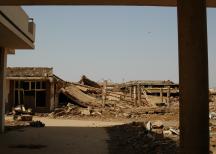
In Kenya, two months of violence not only cost lives, but hundreds of millions of dollars in lost revenue, property and jobs.
It is estimated that the first week of violence alone cost the country US$1 billion. Tourism, one of the biggest income-earners, dropped dramatically as tourists cancelled bookings or left the country in droves.
Inflation soared as vital road links were cut off, making it difficult for farmers to reach their markets. Seven land-locked neighbouring countries that relied on Kenya’s transport networks for imports suffered severe shortages.
But the real cost of the crisis was borne by the people of Kenya, who are still reeling from the impact of the violence.
Reports indicate that the incidence of rape tripled in the months of January and February, with a majority of victims being under the age of 18.
Lawlessness in various parts of the country, including Nairobi, spawned ethnically-based militia groups who killed or forcibly evicted people from their homes and neighbourhoods. Some of these groups are still operating in parts of the country.
Almost every Kenyan was directly or indirectly affected by the violence. As a nation we are traumatised and it will take us a long time to trust again.
If that is the price of democracy, then it is a price many Kenyans are not ever willing to pay again. Zimbabweans should take note.
*Ms Warah is an editor with the UN. The views expressed here are her own and do not necessarily reflect those of the United Nations. This article was first published in Kenya's Daily Nation
**Please send comments to or comment online at www.pambazuka.org
- Log in to post comments
- 615 reads
Author

Anonymous (not verified)