


















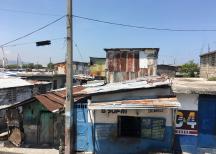









Raj Patel and Eric Holt-Giménez look at the food protests as "angry rebellions of hungry people fed up with the inequitable global food system.' They argue that neoliberalism and global capitalism have eroded policies that would have protected the already poor from sliding into starvation.
It was just a matter of time… and not long at that. The world food crisis and the explosion of “food riots” across the globe has been turned into an opportunity. By whom? By the same institutions that created the conditions for the crisis in the first place: proponents of the new Green Revolution.
In their April 10 editorial entitled The World Food Crisis, the New York Times warns that increases of 25-50% in the price of food and basic grains have sparked unrest “from Haiti to Egypt.” The Times rightly lays part of the blame on the doorstep of northern countries’ thirst for ethanol, pointing out that the substitution of fuel crops for food crops, “[Accounts] for at least half of the rise in world corn demand in each of the past three years.” A rise in demand means a rise in price. This puts food out of reach of poor consumers.
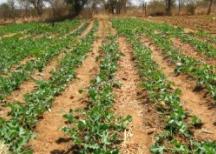
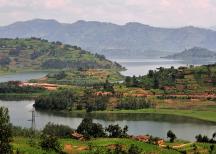
But then confusing economic demand with actual availability, the Times jumps to a dubious solution. Quoting World Bank president Robert Zoellick, the paper calls for “[A] ‘green revolution’ to increase farm productivity and raise crop yields in Africa.” This was of course, a likely response from the World Bank, the institution that, along with the International Monetary Fund, forcibly applied the Structural Adjustment Programs (SAPs) responsible for destroying the capacity of African nations to develop or protect their own domestic agricultural systems from the dumping of subsidized grain from the U.S. and Europe. Over the same 25 years in which SAPs were being implemented, the Consultative Group for International Agricultural Research (CGIAR) invested over 40% if its $350 million/year budget in Africa’s “Green Revolution.” The result? A big zero. Actually, it was worse, because as African marketing boards, agricultural ministries, national research programs and basic infrastructure fell under the scythe of the mighty SAPs, Africa’s agricultural systems steadily eroded. Now their entire food systems are hopelessly vulnerable to economic and environmental shock—hence the severity of the current food price inflation crisis.
How do CGIAR and other Green Revolution champions explain this debacle? The Green Revolution, they claim, ‘bypassed” Africa. If that is the case, then where on earth did CGIAR spend all that money? If not, and the Green Revolution was simply a failure, then how will more of the same solve the present food crisis?
Of course, the Green Revolution is not just one institution, and it is not static. The new genetically-engineered Green Revolution is a conglomeration of public and private research institutions, supported by both tax dollars and conditional investments from a handful of powerful seed/chemical and fertilizer monopolies. The Green Revolution is an industrial modernization paradigm, as well as a campaign for penetrating agricultural markets in the Global South. But above all, the Green Revolution is a political strategy designed to gain and keep control over the Global South’s food systems firmly in the hands of northern corporations and institutions. It is precisely this political dimension of the current food crisis that is so tacitly avoided by the New York Times, the World Bank, and other Green Revolution promoters.
The politics of food, however, are inescapable. Food First associate Raj Patel, author of the recently-released book Stuffed and Starved(http://stuffedandstarved.org/drupal/frontpage), points out that “food riots” have to be understood historically, in the context not of shortages, but of poverty, not of lack of technologies, but of lack of democracy.
“Historically,” writes Patel, “there are two things to look out for. The first is a sudden and severe entitlement gap; a gap between what people believe they’re entitled to and what they can in fact achieve. Agricultural prices have risen because of a perfect storm of biofuels, rising meat consumption, oil price increases, low grain reserves, and bad harvests. That inflation has meant that people believe they ought to be able to feed their families at one level, but end up being able to feed them significantly less. The existence and spread of this entitlement expectation gap is one of the things that matters in the precipitation of food riots.
But there’s a second element. Riots tend to occur in places where there isn’t any other means of making the government listen. It’s a sign, in other words, that democratic proscesses do not exist or have been exhausted. Haiti has long been beset by political instability, and now led by U.S. backed, president, René Préval. He recently commanded people to return to their homes, perhaps not realizing that through their protests, the people were commanding him to make their food cheaper…
But the real question here is why governments are unable to respond to the needs of their citizens. There are two answers. First, the policies that would mitigate the price rises (grain reserves, tariffs, social expenditure for poor people) have all been eroded by decades of neoliberal and free market global trade and development policy.
In order to implement this policy, governments have had to close their ears to the demands of their people. The World Bank won’t give loans without ‘structural adjustments’ that cut deeply into social programs. There has been a strong financial incentive, in other words, for governments to behave less democratically.”
The current protests—over 50 people have been killed in the last two months—are less chaotic riots of starving people than they are angry rebellions of hungry people fed up with the inequitable global food system. The solution to the present food crises is not bringing in the institutions of “disaster capitalism” that created the disaster in the first place. The solution is to democratize the world’s food systems, taking the control away from the handful of agri-food oligopolies and putting it back in the hands of the farmers and consumers who are supposed to benefit from agriculture.
*Raj Patel is the author of "Stuffed and Starved: The Hidden Battle for the World Food System" and Eric Holt-Gimenez is the Executive Director of Food First (www.foodfirst.org).
**Please send comments to or comment online at www.pambazuka.org
- Log in to post comments
- 1795 reads
Author

Anonymous (not verified)