

















http://www.pambazuka.org/images/articles/368/47869hospital.jpgAs the people of Equatorial Guinea continue to die from AIDS and other diseases, Agustin Velloso highlights the fact that the elite in power receive their medical care abroad. Spain, one of the country's more important trading partners, turns a blind eye to Equatorial Guinea's corrupt health-care industry.
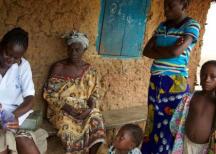
In Madrid at the end of October 2007, President Zapatero promised to give 0.7% of GDP for development aid during workshops promoted by the Spanish Agency for International Development Cooperation (AECID) and presided over by Queen Sofía. As he did so, a boy we can call Miguel, sick with AIDS in Equatorial Guinea, lay dying in his mother's arms in the hospital in Malabo, the country's capital.
One of the objectives of the AECID is to train doctors in Equatorial Guinea to treat AIDS and to advise their clinical work with AIDS patients. So one is not dealing with witchdoctors here but doctors trained by the AECID. Yet they gave Miguel an extract of tree bark rather than the internationally recognised treatment, antiretrovirals. Antiretrovirals are available in Equatorial Guinea; international agencies donate them.
The reason Miguel did not receive the right treatment is corruption by the people responsible for caring for his health. According to ASODEGUE, the Association for Democratic Solidarity with Equatorial Guinea, the prime minister called a meeting several months ago of the national coordinators of the campaign against AIDS and of international agencies working in the country. Among them were delegates from the World Health Organisation (WHO) and AECID's experts who advise Equatorial Guinea's health ministry. A niece of President Obiang also took part. She is not a doctor but a businesswoman. She presented the meeting's participants with a project to produce the bark extract (called Fagaricine) to market as an AIDS treatment. She also asked their opinion about the project.
In its January 2008 Republic of Congo WHO Office Information Bulletin, the WHO notes ‘Fagaricine is not an AIDS drug’[1]. Whatever the experts’ opinion may have been, a tragedy took place shortly afterwards when a group of patients, including Miguel, attended their routine appointments in Malabo hospital to collect their antiretrovirals. Instead, they received Fagaricine. This group of guinea pigs included children and adults and at least one expectant mother. No explanation was given; most of the people did not even know.
The group soon began to get worse. Some died. The population became concerned. Despite foreign aid and government propaganda, AIDS treatment in the country is a disaster. Fagaricine is currently no longer prescribed in Malabo hospital but it is still sold in a few pharmacies.
Meanwhile, Obiang and his circle receive their medical care abroad. Some pay astronomical bills in private clinics in the United States, while others are treated for free in Spain's public hospitals. At the same time private clinics flourish in Equatorial Guinea, but only the very well-off can afford their services. President Obiang's wife owns several of them; most have his family members as partners.
The government is unable to provide health care to the population. As opposition leader Plácido Mico noted at the National Economic Conference in November 2007 ‘the health care situation in Equatorial Guinea, a multimillionaire country, is without doubt the best example of our deep inequalities, injustices and social exclusion, as is the distribution of wealth in the country. Apart from Mongomo, no general hospital in the country permits even a straightforward x-ray.’ [2]
Equatorial Guinea is one of the main producers of oil and gas in Africa and has been a most favoured beneficiary of technical and economic aid from Spain for decades. The AECID implements its health work there ‘via various projects with one common denominator: the formation of a framework permitting the institution building of the National Health System’. One of these projects, the control of endemic diseases, is carried out for AECID by Spanish state bodies – the National Centre of Tropical Medicine and the Carlos the Third Health Institute. With formidable funding they aim ‘to achieve the training and improvement in operative capacity of local technical personnel in the Health System and in the National Programmes’[3]. The main endemic disease is AIDS.
The argument used by the Ministry for Foreign Affairs and Cooperation in Equatorial Guinea to justify their expenditure is that it is being used to build ‘local capacity’ for each of the ‘National Programmes’.
Tuberculosis and AIDS are allowed to get out of control while discriminatory laws are issued against people who are HIV positive, such as Presidential Decree No. 107/2006 of 20 November 2007, which ordains ‘the requirement of an HIV/AIDS test certificate in order to obtain certain public services’.
During the recent electoral campaign in Spain, María Teresa Fernández de la Vega, the Spanish government's First Vice-President and Presidency Minister, promised, alongside Miguel Angel Moratinos, Minister for Foreign Affairs and Cooperation, and Leire Pajín, Secretary of State for International Cooperation, that Spain would ‘make history in the next four years’ and be ‘a leader in solidarity’. She also stressed that Spanish socialists believe in politics ‘as a means to make the world a better place’ and that, since we are the eighth biggest economy in the world ‘we have to take on the responsibility demanded by our place on the world stage’.[3]
Despite the sonorous propaganda about international aid, more resounding still is the silence about the Obiang family's corruption and the consequences of Spanish development cooperation in Equatorial Guinea.
*Agustín Velloso is professor of education sciences at the National University of Education in Madrid. This article was translated by Toni Solo, an activist living in Nicaragua.
**Please send comments to or comment online at www.pambazuka.org
*** For notes and references please click here
- Log in to post comments
- 920 reads
Author

Anonymous (not verified)