
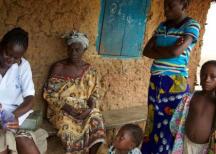





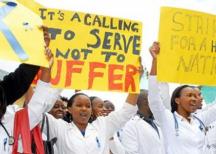























Sexual and gender based violence (SGBV) is a scourge on Africa; a pandemic that has undermined women and girls’ rights to autonomy, bodily integrity, human dignity, sexuality, security and tranquillity. SGBV has, and continues to be a major hindrance to rights and justice. It is prevalent in all our societies across the continent, including non-conflict situations. It is repeatedly used as a weapon against girls and women in conflict/crisis situations. SGBV, including intimate partner violence, is a leading factor in the increasing "feminisation" of the HIV/AIDS pandemic in Africa.
The inadequacy of our societies’ responses has cast SGBV as an abuse we are willing to live with. Women and girls, regardless of their race, age, social and economic status, live in perennial fear of violation.
We, the delegates of say ENOUGH.
As representatives of parliaments, regional institutions and civil society organizations in the Great Lakes, East, West, Southern and Horn of Africa regions, after three days of deliberation, identify these critical actions to ensure we are collectively and individually accountable. We determine together to effect a major push forward in ending impunity and promoting accountability.
We commit to:
1. Ending impunity through accountability and implementation
2. Centring on women survivors of SGBV in conflict and non conflict situations
3. Mobilizing popular support in the fight against SGBV
4. Securing adequate human, financial and material resources in fighting SGBV
5. Building bridges across sectors and within movements
6. Developing a new cadre of leadership
These commitments include the following specific actions:
1. Ending impunity through accountability and implementation
- Law is as useful as we make it. We determine to use the laws we have, including national laws, regional and international instruments, to demand accountability. We will engage in strategic litigation at national and regional levels to enforce implementation.
- We will hold our Executives accountable for decisive action against SGBV. We will require them to uphold and enforce legislation against this pandemic.
- We will prominently, publicly and consistently underscore that violence against women and girls is a major driver and consequence of HIV&AIDS on the continent. It must be addressed as such.
- We will ensure the development of a gender violence index to hold governments accountable to consistently work to reduce the prevalence of SGBV. At a regional level we will name and shame nations that take inadequate action to deter SGBV. At the same time, we will seek the enforcement of the reward system proposed in the AU Solemn Declaration 2004 for nations with progressive gender records.
- We will ensure that our governments ratify and report on conventions that protect and promote the rights of women and girls. As civil society, we vigilantly submit shadow reports on our governments’ record on implementation of conventions, treaties, and international instruments that protect and promote the human rights of women and girls. We will specifically focus at a regional level on domestication and implementation on the Protocol to the African Charter on Human and People’s Rights on the Rights of Women in Africa.
2. Centring on women survivors of SGBV in conflict and non-conflict settings
- We will scale up our efforts and support our governments in providing universal access to social services, including but not limited to education, post-exposure prophylaxis (PEP), emergency contraception and mental health and trauma support for survivors of sexual violence.
- Transitional justice processes in post conflict settings must address SGBV. Women and girls must be central in defining what justice means for them in a transitional justice process. We will reject the pattern of developing reparation priorities on behalf of survivors and seeking to impose these ‘solutions’ on them.
- Drawing on the Nairobi Declaration on the Right of Women and Girls to Reparation, we will insist on reparations and compensation for women and girls that enable them to move forward with their lives. This includes state support for women and girls who have been raped, and support for the children born out of these rapes.
- We will support survivors to give voice to their ideas on justice and reparations as well as their experiences. This means desisting from appropriating the stories of survivors, but rather, enabling survivors to exercise their agency.
- We insist on a gender-conscious state approach to reparations. Post conflict initiatives of disarmament, demobilization, rehabilitation, reconstruction and reintegration must acknowledge the unique situation and needs of women victims and survivors. Equitable attention must be paid to disarmament and demobilization as to rehabilitation and reintegration. Women must be involved in designing, implementing monitoring and evaluating post conflict reconstruction, development, assistance and restoration packages
3. Mobilizing popular support in the fight against SGBV
- SGBV is a vice that affects the entire community. We will focus on reviving communities’ outrage at SGBV and prompting public outcry against the vice. We will work to ensure that SGBV is addressed at all societal levels.
- We acknowledge the need to redefine the concept of masculinity in our communities to embrace the inherent value of women and girls as equal members of society. We recognize that the family as the basic unit of society is an important site for transformation. Thus our collective efforts to engage societal commitment to change will include strategies that tackle attitudes, ideologies and practices that drive and sustain SGBV at this level.
- We will elucidate SGBV in the context of other areas of activism that inspire passionate outrage by society, including rape as torture, and women’s right bodily integrity as a human security concern.
- We will campaign for a sustained approach to change attitudes, beliefs and myths that perpetuate SGBV. We determine that civic education, public education and institutional education must begin to promote human rights and women rights as critical components of citizenship. We commit to supporting the development of model codes of conduct for teachers and curriculums that will enable such education.
4. Securing adequate human, financial and material resources in fighting SGBV
- We commit to harmonize and better coordinate our SGBV focuses as civil society. We will focus on building complimentary approaches, including databanks of actors, that allow us to maximize the human and financial resources at our disposal in fighting SGBV.
- We will seek to ensure dedicated resources for interventions that prevent SGBV across the spectrum and transparent tracking mechanisms to evaluate their success. Similarly in national action pertaining to HIV/AIDS, we will seek to ensure targets and indicators around SGBV and preventative measures taken.
- We will intensify our advocacy to hold accountable all parties to conflict, particularly ensuring that financing for reparations is made by states, international community, non-state actors, responsible multinational corporations and all who ‘benefit’ from conflict and war.
5. Building bridges across sectors and within movements.
- We will use the technological and multimedia facilities available to us to generate public consciousness on the inhumanity of SGBV. We will use our efforts to generate consciousness in the legislative (parliamentary) and public arenas
- We will work to mobilize male parliamentarians, who are already sympathetic to the cause, to draw more men in parliament and in the community into the discussion on and engagement with the problem of SGBV. We call on male MPs to initiate constituency discussions on SGBV.
- We will bring our respective strengths as civil society actors and government actors and fuse these into multipronged, multilevel actions to end impunity for SGBV within our societies.
6. Developing a new cadre of leadership
- We are taking responsibility for the leadership of our communities. We will invest in feminist leadership development at national and community levels for the promotion of women’s rights and welfare. To this end we are committed to a continental target of 50% representation of women in national assemblies by 2015.
- We commit to strengthening women’s leadership capacities to effect change that is pro-women by equipping them with knowledge and skills. We commit to providing autonomous spaces that allow us to continuous set, validate and launch our agenda for ending SGBV.
The waiting must end. Women’s rights movements in Africa have long fought for concrete national actions against SGBV that promote and protect the human rights of all women – including the rights to be free from violence, coercion, fear and impunity. We are determined to see a translation of the rhetoric, policy and legal frameworks into practice.
* Please send comments to [email protected] or comment online at http://www.pambazuka.org/
- Log in to post comments
- 750 reads
Author

Anonymous (not verified)