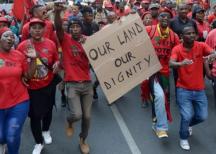













The ‘only existing alternative’ left to South Africa’s poor is to ‘take matters into their own hands’, writes Pedro Alexis Tabensky. And in ‘increasing numbers, and with increasing levels of sophistication, the poor are coming together, ganging up against the common foe responsible for their shameful predicament.’
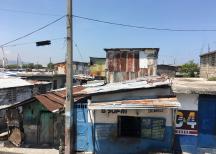
The levels of anger are steadily rising among the poor in direct proportion to the number of empty promises made to them. Their lives are defined by violence; unemployment; poor housing; poor schooling; corruption at municipal level in addition to incompetence; and hunger. Those who have not been co-opted by the mainstream, or are not fanatically wedded to a party that offers them little; or, alternatively, who are not drifting aimlessly, lost to reason or quashing their misery with Umtshovalale, are preparing for something. And the anger fuelling the urge to prepare is of the best sort: Slow-burning and steady; optimistic yet realistic; informed ever more thoughtfully by the idea that there is no blueprint for a better tomorrow. And since things could not be much worse than they are today, the only existing alternative left to the poor, in the eyes of those who in increasing numbers are developing a fighting spirit, is to take matters into their own hands. Over and over again it has been shown to them that officialdom cannot be counted on, that the democracy that we have today is not for them, and hence is a democracy in name only.
Of course there are those among the poor who are resigned to their fate, but resignation can be found in large number in any group (even among the prisoner ranks in Auschwitz). What cannot be ignored, despite these qualifications, is that, increasingly, powerful bonds of solidarity are being forged among the marginalized—often despite fundamental ideological differences and allegiances—against the status quo and its architects.
In increasing numbers, and with increasing levels of sophistication, the poor are coming together, ganging up against the common foe responsible for their shameful predicament. These movements include: Abahlali baseMjondolo (AbM), the Poor Peoples’ Movement, the Landless Peoples’ Movement, the Anti-Evictions Campaign, Mandela Park Backyarders, Sikhula Sonke, and the Unemployed Peoples’ Movement (UPM).
And these independent movements are communicating with one another on a regular basis, having conferences such as the recent Conference of the Democratic left in Johannesburg, and using the law and its institutions to achieve their aims. As other movements in Northern Africa and the Middle East, particularly in Tunisia and Egypt, which have very recently forced their despots to flee, they are becoming increasingly more sophisticated. They are learning how to use the structures of power to their own advantage. They are finding moneys here and there without strings attached, thinking about possible futures without economic injustice, rereading Biko and Fanon, and using their feet and voices. And, crucially, for much of the future of revolt will be shaped by this, they are using communication technologies to great effect. The cell phone and the internet are becoming instruments for genuine democracy outside of the stifling structures of power.
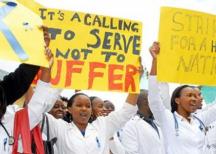
Sadly, more often than not, the voices of the dispossessed are met with police or grassroots thuggery (such as the widely reported violence met out against AbM in Durban in 2009 and the ANC Youth League sabotage of a meeting convened by the UPM to discuss the Makana Municipality water crisis in 2010). But this violence only stops them temporarily. In the medium term, it works as a catalyst. The more they are shot at and beaten in police stations and on the streets around the country, the more they become convinced that their fight is to assert their humanity; the more they are convinced that they are largely alone and that what they hope for can only be brought about by their own efforts. They are no longer waiting for a kind of secular second coming.
And their voices are starting decisively to be heard and taken seriously by the mainstream, despite countless acts of official and semi-official violence met out against them, and despite mainstream condescending portrayals of them as angry children unproductively venting out frustration or as blind automata of some mysterious third force.
This condescension is not new in our country. Biko warned the architects of apartheid that one of the worst things they can do for their nefarious cause is to assume that black people—almost all extremely poor—cannot think. This false assumption, Biko thought, helped bring the township about, an ideal place for people to share ideas, to plan and above all to mobilize. History speaks of the results.
As mentioned above, these movements are flourishing outside of official party-political structures. And the choice to remain outside of such structures speaks of a lack of trust in officialdom, of a sense that the democracy that this country requires must start on the ground and, especially, in the shacks. One key reason why this sense has become particularly relevant to our current context is that there is an increasing realization that there are no viable mainstream political parties.
The realization that democratic action can no longer be deferred is motivating grassroots movements to promote the idea that the best vote is not to vote at all. There is the standard view that one of the primary democratic tasks of all responsible citizens happens in the voting booth. But arguably voting for this party or that is only genuinely a democratic task when the available alternatives are acceptable. However, in a context where this is not the case, then the most democratic thing to do could be to make a statement of non-confidence by not voting.
And it is also not surprising that grassroots political movements are encouraging their members not to vote, for they tend to have a conception of democracy which is radically participative. They do not believe that the best citizens can do is to delegate political responsibility in the voting booth. Rather, for them, true democracy occurs when citizens take it upon themselves to be the makers and caretakers of democracy.
South Africa’s untouchables are growing restless and they are no longer waiting inside their shacks for democracy to pay them a visit.
BROUGHT TO YOU BY PAMBAZUKA NEWS
* Professor Pedro Alexis Tabensky is in the Department of Philosophy at Rhodes University, South Africa.
* Please send comments to [email protected] or comment online at Pambazuka News.
- Log in to post comments
- 4533 reads
Author

Anonymous (not verified)