















Did the Tanzanian activists cause a breach of the peace or prejudice public safety and the maintenance of public order? Crucially, were the police, by prohibiting the alleged assembly and subsequently arresting the activists, using their discretion appropriately?
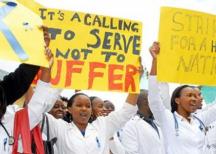
Recently, on 9 February, 16 prominent human rights activists were arrested in Dar es Salaam on the grounds of unlawful assembly. The human rights defenders, who included the Executive Director of the Legal and Human Rights Centre and the Executive Director of the Tanzania Media Women's Association, were arrested at the Muhimbili National Hospital following a doctor’s strike that had paralysed the provision of health services. The police authorities allege they had gathered illegally and were intending to hold an illegal demonstration, although the group maintains that they were not there to protest but to observe the dialogue between the government and health officials. The activists were detained and then later released on bail, pending confirmation of charges.
These events put the spotlight on the laws and procedures regarding freedom of assembly, and raises questions about whether the police were acting reasonably in consideration of the constitutionally guaranteed right to assemble.
Article 20 of the national constitution enshrines the right for people ‘to freely and peaceably assemble, associate and cooperate with other persons’. However, as expressed in the constitution, this right can be limited by other national legislation for certain purposes, including ensuring public order or where it is in the public interest.
The Police Force and Auxiliary Services Act forms part of the national legislation which regulates public assemblies. This Act states that notification must be provided to the police 48 hours in advance of a planned public assembly. The police are given broad powers to prohibit the assembly if they believe it ‘is likely to cause a breach of the peace or to prejudice public safety or the maintenance of public order’.
The question is, did the 16 activists cause a breach of the peace, or prejudice public safety and the maintenance of public order? Crucially, were the police, by prohibiting the alleged assembly and subsequently arresting the activists, using their discretion appropriately?
Arguably a ‘breach of the peace’ could be interpreted very broadly by police, allowing them to use their discretion to prohibit all public assemblies. This is very concerning, and is likely to be considered an unnecessary restriction in international law. The International Covenant on Civil and Political Rights states that no restriction can be placed on the freedom to assemble save for those ‘which are necessary in a democratic society in the interests of national security or public safety, public order ...or the protection of the rights and freedoms of others’. Critically it is noted that, under this international covenant, only restrictions that are ‘necessary in a democratic society’ can be placed on the fundamental human right to assemble.
Applied to these circumstances, a public assembly held to observe (or allegedly protest) negotiations about health sector issues is likely to be found as an assembly that is reasonable in a free and democratic society, and one that is not likely to unreasonably breach public order or public safety.
As officers charged with protecting the rights of citizens, the police must use their discretion to limit public assemblies wisely, and ensure that they are only placing restrictions on the fundamental right to assemble that would be deemed necessary in a democratic society. In particular, the police must be careful to ensure that public assemblies called for a political purpose, which are a common and indeed vital aspect of a healthy democracy, are not arbitrarily restricted or prohibited.
A hallmark of a democratic society is the right to peacefully assemble and voice opinions. Policing of such events should be conducted in accordance with the constitution and international principles and standards. Tanzania must ensure that they follow best practice human rights policing to cement its place as a leader in good policing in East Africa.
BROUGHT TO YOU BY PAMBAZUKA NEWS.
* Please do not take Pambazuka for granted! Become a Friend of Pambazuka NOW and help keep Pambazuka FREE and INDEPENDENT! Pambazuka Friends.
* Sarah Mount and Sanyu Awori work for the Commonwealth Human Rights Initiative.
* Please send comments to editor[at]pambazuka[dot]org or comment online at Pambazuka News.
- Log in to post comments
- 1970 reads
Author

Anonymous (not verified)