











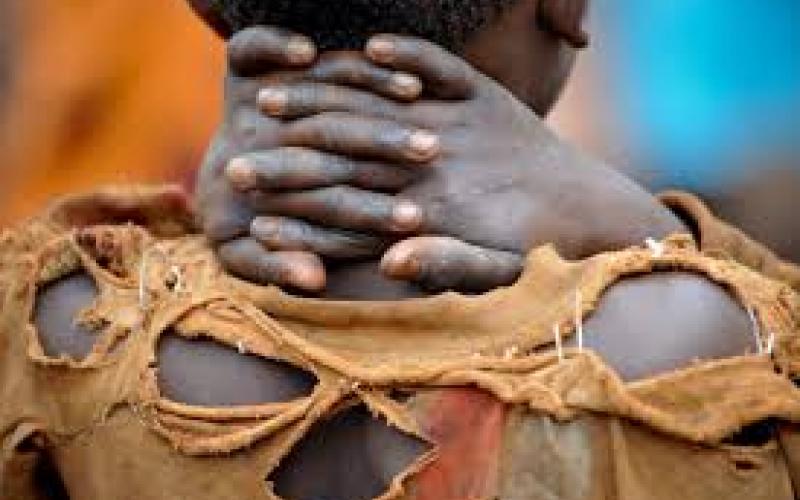
Surveying a history of exploitation of Africa's people and resources, Lord Aikins Adusei denounces the multinational corporations continuing to plunder the continent's natural wealth. Situating today's ongoing exploitation of African resources within an established tradition of external interference, Adusei decries the ability of corporations to avoid paying taxes and keep dictators indifferent to their citizens' plight in their pocket. But with the emergence of China as a viable funding alternative to the World Bank and the International Monetary Fund (IMF), the author concludes that the 'second colonialism' driving Euro-American globalisation may be at an end.
Before the end of the first period of colonialism African nations were properties of their colonial masters who did what they could to rape the continent of whatever resource they deemed good for the development of their citizens in Europe.
Out of nowhere and without any consultation with the people of the African continent, the Europeans met and divided the continent amongst themselves in what has been termed 'The Scramble for Africa'.
Through this scramble France, Britain, Belgium, Spain, Portugal, Germany and Italy all went on a looting spree, raping Africa of her resources without putting any of the proceeds back for the development of the continent.
When US President Franklin D. Roosevelt visited Gambia on 13 January 1943, he was so appalled by the conditions of Gambians that he made this lamentation:
'It's the most horrible thing I have ever seen in my life… The natives are five thousand years back of us… The British have been there for two hundred years – for every dollar that the British have put into Gambia, they have taken out ten. It's just plain exploitation of those people.'
He continued, telling his son Elliot, 'I must tell [Winston] Churchill what I found out about his British Gambia today. This morning, at about eight-thirty, we drove through Bathurst to the airfield.' (Elliott notes that it was here that his father began speaking with 'real feeling in his voice'.) 'The natives were just getting to work. In rags … glum-looking…They told us the natives would look happier around noontime, when the sun should have burned off the dew and the chill. I was told the prevailing wages for these men was one and nine. One shilling nine pence. Less than fifty cents.'
'An hour?' Elliott asked.
'A day! Fifty cents a day! Besides which, they’re given a half-cup of rice. Dirt. Disease. Very high mortality rate. I asked. Life expectancy – you’d never guess what it is. Twenty-six years. Those people are treated worse than the livestock. Their cattle live longer!'[1]
And the exploitation was not peculiar to Gambia. The Gold Coast (now Ghana), Nigeria, the Ivory Coast, Zaire (now the Democratic Republic of Congo (DRC)), Namibia, South Africa, Congo and Angola all suffered from the same colonial exploitation and underinvestment.
For almost 300 years the Europeans, who were supposedly civilised, devout Christians, irresponsibly looted Africa’s resources and made slaves of its natives without developing their colonies. When the local population protested against this exploitation without reciprocal investment, they were brutally crushed, as happened in the Congo, where King Leopold II of Belgium looted the resources, made slaves and killed close to 10 million Congolese.
In 1904 to 1907 the German, led by Commander-in-Chief Lothar Von Trotha, committed their first genocide of the 20th century by killing 90 per cent of the Herero and the Namaqua people of South West Africa (now Namibia) when the people protested against the exploitation of their resources. And the sad stories of South Africa, Zimbabwe, Algeria, Namibia, Kenya and Angola, where people were denied access to land, citizenship and basic rights and had to take up arms before they were granted independence, are in many history books. We know how Nelson Mandela (now a hero in Europe) and a number of freedom fighters endured long prison sentences, torture, exile and deaths in the hands of their 'devout Christians' and 'civilised' European colonisers. The idea was that through The Scramble for Africa they had bought Africa and had power to do as they wish, hence the rape, torture, genocide and mass killings.
While Europeans became richer, Africans became poorer. For example, with the looting of the Congo’s resources, enslavement, the amputations of hands and 10 million deaths, Brussels – which now doubles as the capital of the European Union – and Belgium were built.
When they were given their ‘freedom’, the fathers of independence inherited nothing more than empty treasuries. They realised that after more than 300 hundred years of colonial rule their colonial masters had left them nothing; no money and no infrastructure.
This bad situation and their eagerness to improve the lives of their peoples forced them to turn to the International Monetary Fund (IMF) and World Bank for assistance, and when they went lo and behold their former colonial masters were there waiting for them. The colonisers used their majority votes to dictate to the World Bank and IMF about how these former colonies should be helped. Of the 185 members that make up the IMF, six colonial masters and their allies – comprised of the United States, Germany, Japan, the United Kingdom, France and Italy – control 42 per cent of the votes.
The colonial masters dictated to the IMF and the World Bank that for Africans to be helped, they had to open their economies to allow European corporations in. This underscores the numerous conditionalities that are associated with loans from these institutions. The conditionalities are nothing more than a smokescreen designed to ensure that Europeans never lose their grip on the resources of their former colonies. Some of these conditionalities include instituting secret memorandums of agreement, subsidies to foreign corporations and massive tax concessions (such as income tax, usage fees and property tax) – the primary source of revenue for 'export-oriented', developing countries.
The sad thing is that Africans thought independence would give them respite to develop, but this was never to be as the colonial masters used their corporations and intelligence services to deliver vengeance on the people. They encouraged and financed civil wars, unashamedly polluted rivers, wells and the soil through their oil and mineral activities, deliberately understated their profits and falsified profit documents, as well as undervaluing their goods, indulging in smuggling, theft and the falsification of invoicing and non-payment of taxes, and employing kickbacks and bribes to public officials. They also overpriced projects, provided save havens for looted funds, promoted the sale of guns, overthrew African leaders, supported dictatorships and assassinated those who disagreed with them. We know, for example, the tragedy of Patrice Lumumba and the support the West gave Mobutu.
The corporations forced onto Africa by the IMF, the World Bank, the US and Europe have been implicated in a number of cases for corrupting African leaders and stealing trillions of dollars worth of resources. Global Financial Integrity says that '$900 billion is secreted each year from underdeveloped economies, with an estimated $11.5 trillion currently stashed in havens. More than one quarter of these hubs belong to the UK, while Switzerland washes one-third of global capital flight.' Of this $900 billion, $150 billion comes from Africa.
'The idea that Switzerland has a clean economy is a joke; it is a dirt-driven economy,' says Richard Murphy, director of Tax Research LLP. The Swiss Bankers Association claims that four-fifths of the nation supports banking secrecy, which reveals a society deeply embedded in a culture of impunity and exploitation. The fact is that those who steal must find a way to hide their loot, and Switzerland provides the ideal environment for such crimes to take place. And it is not Switzerland alone that does not have a clean economy. Britain, France, Germany, Luxembourg can all be described as vampires.
In her article 'Capital flight: gingerbread havens, cannibalised economies', Khadija Sharife writes:
'This policy is especially lethal for developing countries where the poor are now caught in tax brackets, courtesy of the IMF and World Bank’s structural adjustment programmes (SAPs), instituting policies ranging from “tax holidays” to the privatisation of state services [and] carving out huge slices of natural capital at corporate auctions… Africa has collectively lost more than $600-billion in capital flight, excluding other mechanisms of flight including ecological debt (globally estimated at a potential $1.8-trillion per annum), the cost of liberalised trade (just under $300-billion) … and the list goes on…'[2]
Thus with the support and collusion of the IMF and the World Bank these corporations are paying close to nothing for the resources they take from Africa.
Africa has been labelled the world’s most corrupt region because multinational internal mis-pricing makes up 60 per cent of capital outflow, with corporations declaring profits in tax havens, as opposed to the country of performance. Corporations declare about 40 per cent of their profits in the African countries where they operate, siphoning the rest into their safe-haven accounts in order to avoid paying tax which could be used to eradicate poverty. And this is not the end of the corruption and the story of daylight robbery.
We know how Elf operated as an arm of the French state supporting dictators, looting resources and establishing a flush fund used to bribe African leaders to look the other way while the corporation looted Africa’s oil and gas.
The author of Poisoned Wells Nicholas Shaxson wrote of the subject: 'Magistrates discovered the money from Elf’s African operations supplied bribes to support French commercial, military and diplomatic goals around the world. In exchange, French troops protected compliant African dictators.'
This explains why there are so many more corrupt dictators in French-speaking Africa compared with elsewhere in Africa. Gabon's Omar Bongo, Togo's Gnassingbé Eyadéma, Zaire's Mobutu Sese Seko, Guinea's Lansana Conté, Côte d'Ivoire's Félix Houphouët-Boigny, Burkina Faso's Blaise Compaoré, Congo's Sassou Nguesso and Chad's Idriss Déby are some of the compliant leaders who were or have been protected by France. And what happened to the non-compliant African leaders? Your guess is as good as mine. Please find time to read more about Bob Denard, a Frenchman who made a career as a mercenary overthrowing African leaders. French author Jean Guisner says: 'Denard did nothing that was contrary to French interests – and he allegedly acted in close cooperation with French intelligence services'.
In the Elf corruption case André Tarallo, the real boss of Elf-Afrique, 'told the court in June 2003 that annual cash transfers totalling about £10m were made to Omar Bongo, Gabon's president, while other huge sums were paid to leaders in Angola, Cameroon and Congo-Brazzaville. The multi-million dollar payments were partly paid to ensure the African leaders' continued allegiance to France. In return for protection and sweeteners from Elf's coffers, France used Gabon as a base for military and espionage activities in West Africa.'[3]
The real deal is that Elf, Shell, BP and their counterparts in Europe and America pay bribes to African leaders to induce them to look the other way when they plunder resources. Ask any Gabonese or Congolese whether they have benefited from the oil and diamonds and the answer will be a big no. What is so tragic is that the people know they have oil, diamonds and see these companies processing them everyday yet do not know where it goes, who buys them and where the proceeds go.
In the UK former Prime Minister Tony Blair was accused of selling a device based on ageing technology to Tanzania. 'The UK sold a useless air traffic control system to Tanzania in 2001 in a scandalous and squalid deal, the House of Commons was told.' Clare Short, an minister of parliament, said, 'The deal was useless and hostile to the interests of Tanzania.' She continued, 'Barclays Bank had colluded with the government by loaning Tanzania the money, but lying to the World Bank about the type and size of the loan.' Short said, 'Tanzania could have paid much less for the same equipment which cost them £28m'. Shadow International Development Secretary Andrew Mitchell said 'BAE had used ageing technology and said the system was not adequate and too expensive.'[4]
And it all happened after they had bought Tanzania officials to look the other way while a device based on ageing technology was being sold to the country. BAE colluded with Tony Blair and Barclays Bank to sell a useless commodity at an exorbitant price to Tanzania. This is nothing but a continuation of the contempt and impunity with which Europeans have traditionally treated Africa before, during and after colonialism. BAE is indirectly saying that Africans do not deserve the latest technology even if they pay a cut-throat price. It is also a message to Africans that they must develop their own technology and not rely on the generosity of others.
It is no secret that the Shell oil company colluded with Nigeria's corrupt Abacha regime to steal oil, pollute the country's rivers, wells, creeks and soil and render millions of farmers and fishermen in the Niger Delta jobless. '[Shell] admitted that it inadvertently fed conflict, poverty and corruption through its oil activities in the country. Nigeria contributes to about 10% of Shell's global production and is home to some of its most promising reserves, yet the country is steeped in poverty and conflict.'[5] So Shell, in addition to stealing Nigeria’s oil and polluting its rivers, wells and soils, also promotes corruption, poverty and conflict.
In the DRC about five million people have died in a war, the underlying motive for which is the satisfaction of the West's insatiable appetite for high-quality, low-price cell phones, laptop computers, Playstations, jewels, diamonds and coltan. And in Paris, London, Brussels, Berlin, New York or Washington, who cares about five million deaths anyway? Why has the DRC's war not ended? Who supplies the rebels their arms and who buys the minerals they mine illegally? Why have Ugandan and Rwandan forces crossed several times into DRC? And whose agenda are they pursuing? A report by the UN says it all.
The panel calls for financial restrictions to be levied on 54 individuals and 29 companies it says are involved in the plunder, including four Belgian diamond companies and the Belgian company George Forrest, which is partnered with the US-based OM Group.
The individuals named include Rwandan army Chief-of-Staff James Kabarebe, Congolese Minister of the Presidency Augustin Katumba Mwanke, Ugandan army Chief-of-Staff James Kazini and Zimbabwean Parliament Speaker Emmerson Mnangagwa, BBC online reported.[6] The report also accused 85 South African, European and US multinational corporations – including Anglo American, Barclays Bank, Bayer, De Beers and the Cabot Corporation – of violating the Organization for Economic Cooperation and Development's (OECD) ethical guidelines on conflict zones.
The guidelines they were accused of violating relate to arming Rwandan, Ugandan and Congolese rebels and profiting from their illegal looting of Congo’s minerals, as the following excerpt shows:
'Despite the recent withdrawal of most foreign forces, the exploitation of Congo's resources continues, the report says, with elite networks and criminal groups tied to the military forces of Rwanda, Uganda and Zimbabwe benefiting from micro-conflicts in the D.R.C. "The elite networks derive financial benefit through a variety of criminal activities, including theft, embezzlement, [the] diversion of public funds, [the] undervaluation of goods, smuggling, false invoicing, non-payment of taxes, kickback[s] to public officials and bribery," and added that such pillaging is responsible for much of the death and malnutrition in eastern D.R.C.'[7]
And so while millions die in Africa with the complicity of these corporations, European and North American citizens, with all their hypocrisy, live to enjoy lavish holidays. And when Africans try to reach Europe the citizens say 'Europe is full. No more immigrants.' Where do the queens and kings in Europe get the diamonds and gold that they show off? Is it not from the blood diamonds from Congo, Sierra Leone and other conflict zones in Africa that are smuggled out and sold in Brussels, Zurich, London and New York?
And this is not their only crime. We know how Halliburton established a $180-million flush fund and bought Nigerian officials to secure a $10-billion oil contract. We know Acres International of Canada paid $260,000 to secure an $8-billion dam contract in Lesotho. We know Swiss, British, German and French financial and banking institutions have made fortunes by providing safe havens for funds looted by Abacha, Mobutu, Bongo, Conté, Kenya's Daniel arap Moi and the rest of the dictators in Africa. And it is no secret that Belgium is angry with the DRC government for inviting China into the country because they are privy to and beneficiary of all the daylight robbery going on in the resource-rich but economically impoverished country.
Africans know that these corporations are making fortunes but they see none of the benefits from these fortunes. Ghanaians know gold and diamonds are being mined at Obuasi and Akwatia but they do not know where it goes, who buys them and where the proceeds end up, and the same is true of the oil in Nigeria, Gabon, Cameroon, Algeria, Angola and Equatorial Guinea. And as for the DRC, a nation with one-third of world’s natural resources, the less I say the better.
This corrupt, daylight robbery is what has been promoted as globalisation, with Africa and the Third World being encouraged to join by Europe, America, the IMF and the World Bank. My question is whose globalisation? Is it the globalisation that only those with blue eyes enjoy or what? If the answer is no then the IMF and the World Bank should explain why the world is divided between the 'white haves and the coloured have-nots'. Is this not a second colonialism dressed as globalisation?
Susan Hawley says it all:
'Multinational corporations’ corrupt practices affect the South (i.e. Africa, Asia and Latin America) in many ways. They undermine development and exacerbate inequality and poverty. They disadvantage smaller domestic firms and transfer money that could be put towards poverty eradication into the hands of the rich. They distort decision-making in favour of projects that benefit the few rather than the many. They also increase [the] debt that benefit[s] the company, not the country; bypass local democratic processes; damage the environment; circumvent legislation; and promote weapons sales. Bribes put up the prices of projects. When these projects are paid for with money borrowed internationally, bribery adds to a country's external debt. Ordinary people end up paying this back through cuts in spending on health, education and public services. Often they also have to pay by shouldering the long-term burdens of projects that do not benefit them and which they never requested.'[8]
And in all these, the Western media has kept silent and has not raised a voice against what its governments, intelligence services, corporations and businessmen are doing to Africans. They prefer instead to criticise China for courting the same African leaders Euro-Americans have been protecting for decades. A clear hypocrisy isn’t it? These are the same criticisms King Leopold II levelled against the Arabs who were competing with him for resources and slaves in Congo, and we know what Leopold II, the 19th-century Hitler, did in the DRC in the name of Christianity and 'civilisation'.
With China as a fierce competitor, Africans now have a choice not to go to the World Bank and the IMF for conditional loans. They also have a choice to either give their resources to Chinese companies or European and American cartels. It may be the beginning of the end of colonialism, slavery, instability, dictatorships, corruption and all the ills that Europeans and Americans have been promoting in Africa.
It may be the beginning where Africa’s resources will be bought and payment made to the people and a new chapter that will usher in Africa’s development and close the poverty gap from 5,000 years to perhaps 100, as observed by Franklin D. Roosevelt.
* Lord Aikins Adusei is an activist and anti-corruption campaigner. He blogs at www.iloveafrica2.blogspot.com and can be contacted at [email][email protected].
* Please send comments to [email protected] or comment online at http://www.pambazuka.org/.
NOTES
[1] US President Franklin D. Roosevelt 1943, The American Heritage.
[2] www.unwire.org
[8] The Corner House, June 2000.
- Log in to post comments
- 356931 reads
Author

Anonymous (not verified)