



















 cc The majority of South Africans are dirt-poor, writes William Gumede, something which makes the country's leaders fondness for lavish living on public money all the more unacceptable. President Jacob Zuma must instil a culture of engagement with ordinary citizens among his officials, Gumede argues, one which ends self-serving cronyism and sees public funds directed to those most in need.
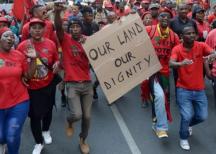
Given the extreme poverty of the majority of ordinary South Africans, it is an affront that political leaders elected after promising to change the lives of the poor live in extraordinary opulence on public money. The majority of South Africans are living in terrible poverty, without jobs, houses and food. They have given the ANC (African National Congress) a mandate to lift them out of grinding poverty as quickly as possible.
Given that the majority of South Africans are dirt-poor, our leaders must start to live modestly. It was an eyesore to see that some political activists during the past elections when campaigning in squatter camps were driving Hummers while urging poverty-stricken people who do not know where their next meal will come from to vote for them. This is really an insult to the majority of South Africans struggling to make ends meet in these tough economic times.
Elected leaders are living the high life, Paris Hilton-like, on taxpayers’ money. It is easier for elected leaders living in a bubble of luxury to forget about the poor. Jacob Zuma must change the culture of opulence so pervasive in government. For starters, Zuma must ban extravagant ‘blue-light’ convoys, where one minister is chartered in a large convoy of cars driving at break-neck speed pushing other ordinary motorists and pedestrians off the road. The crowd of security guards that surround ministers must be cut down to one per minister. It is a disgrace that they are surrounded by so many bodyguards, while an ordinary citizen in Soweto must face the brunt of daily crime, without bodyguards, or responsive police, without the money to buy expensive private security.
Better still leaders must start to use public transport. Ken Livingstone, the former mayor of London in the United Kingdom, took the bus and the train to work and meetings every day. This also made him more accessible to ordinary citizens who could in person vent their anger at him for a lack of delivery. If local politicians take minibus taxis, trains and buses everyday, they will experience first-hand the daily dance-of-death that ordinary citizens experience using public transport.
Leaders must also drive more humble cars. Imagine President Zuma decreeing that all ANC-elected public officials should driving more humble official cars, say cars costing under R50,000. Leaders must also live modestly. Elected leaders must live in the constituency areas which they represent. This means if they represent Soweto, they must live there. This will also ensure they are reminded daily of the hardships and poverty of ordinary South Africans. This will also make them immediately accessible to the ordinary citizens they claim to represent.
Public elected officials must behave with more humility. Ministers must stand in queues in shops like ordinary citizens. President Zuma must issue an instruction that ministers should no longer be addressed with 'Your Excellency' or 'Your Honorary'; instead the president should instruct all his ministers to address ordinary citizens in this way. This should help install a culture of elected officials who are there to serve citizens. There should be no jumping of queues because the person is a minister or a 'VIP’.
Secondly, all VIP areas at public events that are funded by taxpayers must be banned. Leaders must mingle with ordinary people. Furthermore, extravagant parties for publicly-elected officials funded by taxpayers should be banned. So too must the huge food banquets available at meetings of government officials. This will save taxpayers huge amounts of money which can be redirected elsewhere to poverty-alleviation projects.
Excessive bonuses in the public sector should be curtailed. Even worse, in many state-owned companies executives give themselves performance bonuses, when they have managed failing and loss-making institutions. This is also a golden opportunity for President Zuma to bring accountability to South Africa’s political system. Elected leaders who do not deliver must be fired, especially if they are close allies and friends of the president. Under Mbeki, the most incompetent deployees were never fired if they were slavishly loyal to the president. Zuma’s proposal to open a direct line to him, where ordinary citizens can complain about poor service-delivery, corruption and indifference is a good idea. What matters is whether action will be taken against callous government officials following complaints by ordinary citizens.
* This article first appeared in the Sowetan.
* William Gumede is author of Thabo Mbeki and the Battle for the Soul of the ANC.
* Please send comments to [email protected] or comment online at http://www.pambazuka.org/.
- Log in to post comments
- 859 reads
Author

Anonymous (not verified)