
























Looking back on the September attacks on Abahlali baseMjondolo members in Kennedy Road, Durban, Raj Patel profiles the views of key Abahlali activists including S’bu Zikode, Zodwa Nsibande and Mazwi Nzimande. Though strongly disrupted by the African National Congress-led (ANC) attack in September, Abahlali has continued to meet, while the absence of its leaders from the Kennedy Road settlement has illustrated the deficiencies of the ANC.
In a house in a leafy Durban suburb, lightly festooned with Christmas decorations, a TV is playing the Adam Sandler movie 'Bedtime Stories'. Across scenes of gumballs falling from the sky and Roman gladiator races, our hero tries to get ahead through wish fulfilment. Predictably, his dreams don’t come true in quite the way he hoped.
Under other circumstances, the house in which this TV sits might have been someone’s dream come true, too. It has all the mod-cons – running water, flushing toilets, electricity – and the only neighbourly menace is the sirens of hair-triggered home-security systems. But this is only a temporary home, a safe-house hidden in white suburbia, sheltering activists from the Abahlali baseMjondolo shackdwellers movement. The comforts of this house are a reminder of the comforts of a home they’ve lost, and the nightmare they’ve been through over the past few months.
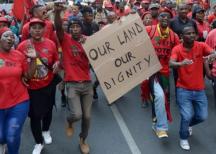
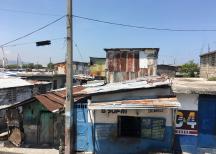
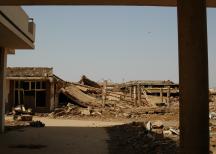
On 26 September 2009, around three dozen armed men chanting ethnic slogans descended on the Kennedy Road shack settlement in Durban, home to 7,000 people, including many of the movement’s leaders. Members of the Kennedy Road Development Committee were hunted by the mob and, in the attack, over 30 activists’ houses were destroyed and two people were killed. It is increasingly clear that this attack was orchestrated by the ANC (African National Congress) in a deliberate attempt to smash the shackdwellers movement and to reassert their rule over the city’s poorest people. Those leaders who didn’t immediately flee were arrested for the killings and have been in prison waiting for their bail-hearing ever since.
Abahlali had long been a challenge to the ANC, representing the largest autonomous and militant group of poor people in the country, with several successful challenges to the ANC’s treatment of shackdwellers under their belt. After the attack, many activists went into hiding, and the ANC declared the community ‘safe for democracy’. They claimed they’d smashed the movement and, for a while, it seemed as if the ANC’s dreams had come true too.
'We weren’t surprised that it happened. We were organising for many years', said S’bu Zikode, one of the movement’s leaders. 'They were late to crush us.' His voice is heavier than I remember it.
Abahlali had long been fighting the local government to deliver on the promise of housing made when apartheid ended in 1994. But more recently, the movement had taken on local gangsters and owners of shebeens, informal bars in the shacks which play loud music and serve alcohol late into the night 'stopping the children to sleep, and making those who have to work very tired the next morning', according to S’bu. The Kennedy Road branch of Abahlali negotiated a 10pm end to drinking. This didn’t go down well with those whose profits were dented, and who were connected to the ANC. Which is how the latest nightmare began. The thugs arrived soon after the community tried to wrest control back from the gangsters.
I ask how the activists are feeling. Zodwa Nsibande said, 'We survive on hope.' Her voice, too, is tired. 'We are scattered. There’s no assurance that nothing will happen. The ANC may catch us. But we aren’t doing anything wrong. Everything we do is within the law. We shouldn’t be scared.' Then, without skipping a beat, 'We know we are going to die, but when the time comes, no one can smile. But one thing I believe. If we didn't have an impact in our work, they wouldn't attack.'
And yet, as Mazwi Nzimande told me, the feeling toward the ANC isn’t hatred. 'I was shamed by the ANC. We're not taking ANC votes – we're in the process of making life for all – that's why we did what we did.' Zodwa agreed, but didn’t think the attack was inevitable: 'I feel ashamed. I was not expecting this from the custodians of democracy.'
So has the ANC blown a hole in the movement? Mazwi thinks not. 'There are many people who want to join us. We don’t have a specific place for meetings but we’re still moving. One thing is that I was thinking about was that they were trying to destabilise us, but we are more popular than before. More people want to join Abahlali. There is a new branch in Pinetown, and new people from the transit camps want to join as well.'
S’bu Zikode is upbeat about Abahlali’s prospects too, seeing the absence of leadership in the Kennedy Road shack settlement not as a victory for the ANC, but as an organising and healing moment. It’s a chance to regroup, not for the leaders in exile, but for the community left behind:
'We know that time is a big doctor, and there are interesting debates that are happening in Kennedy Road. Life without Abahlali is not the same. When we were chased out, the ANC said we [the Kennedy Road Development Committee] were stopping development. So they put in an electricity tower within six days. People were happy there was electricity. But that is all the ANC did. Now, without Abahlali, the Kennedy Road residents are seeing that the ANC isn’t bringing development. The community service centre where we were had pre-school. We took care of that. Those kids are no longer having to attend school. The crèche has been closed. The feeding schemes have stopped, and there is no bread for the hungry. The HIV/AIDS drop-in centre that we ran has closed. There has been an increase in the death of people who had been attended by our volunteers. It is sad that no one was willing to do it. People thought it was not a hard work. Even on the side of our office, the grass has grown tall because no one cares for it, and now it is a toilet.'
'Now, the people who conducted the attack are no longer in Kennedy Road. And the same community is reflecting. They are asking themselves if attack made things better or worse – it’s a good mirror of reflecting. There is a good debate about how we were chased out.'
It seems almost everything can be turned into an opportunity for reflection and organising. At the moment, when Abahlali goes to court to support those arrested in the attacks, the ANC also sends a busload of the faithful, usually stopping off for beer en route, to jeer at Kennedy residents. 'They are unruly, yes, but some Abahlali engage them. People think that the attack was a one- or two-days event, but we’re still continuing it.' Hearts and minds can be won over outside the courtroom or, indeed, at the local constabulary.
For years, the movement has been at the wrong end of the sjamboks of the notorious Sydenham police station, a few minutes’ walk away from two major Abahlali settlements. But after repeated encounters, including many clashes at protests against the police, the Kennedy Road Development Committee established a shack security committee to which the police were invited. The police station (and its superintendent, Glen Nayager) were won over through attrition, integrity and good faith. This led to a meeting where community and police together decided to place a closing time on shebeens. And when the local ANC branch came to the settlement to defend the gangsters, the Sydenham branch were sidelined.
Today, Kennedy Road has a new police force deployed there. S’bu says 'Now, Kennedy Road is patrolled by the Metro police and the police from Inanda [several miles away]. The crime of the Sydenham police was to have a relationship with us.' The progress that had been made has been rolled back a little. But, briefly, Abahlali had defanged their most venomous foe. And they’re sure they’ll be able to do it again.'
In the meantime, though, I asked what people outside South Africa might be able to do to help. Zodwa called on the international community to shame the government, as she has been ashamed by it. 'That’s the only thing our government is able to understand. People must put pressure on them.' In New York, Auckland and London, groups have already protested outside South African consulates – and as the 2010 soccer World Cup in South Africa comes closer, there’s a window of opportunity to make the South African government squirm, with some very specific demands. Zodwa again: 'What we need is an independent commission of enquiry. There should be no one from the state who is also involved, and no one from Abahlali, because we are all suspect in this whole issue. It mustn’t be by us – it must be neutral. So that it will cover the facts of what is really going on.'
In the meantime, the movement continues to meet, and plans are underway for a peoples’ 2010 World Cup, an ‘upside-down’ tournament involving poor people from around the world. As Mazwi put it, 'We are not going to compromise, not going to give up. We will intensify our campaign.'
As the year ends, it seems as if the ANC will try to tell itself its usual bedtime stories, that the party is in charge, that it – and only it – is the harbinger of development, that progress cannot happen without order, and that it will be vindicated by the 2010 World Cup.
Some people will believe the myths. As I left South Africa, I heard that Bill Gates had recently visited Durban to learn how it was a model for social change for the urban poor, and to use it as a template for urban development elsewhere through his foundation. Yet right beneath the feet of the world’s richest man, the world’s poorest people were organising a rude awakening.
The dreams of the powerful seldom work out the way they hope.
BROUGHT TO YOU BY PAMBAZUKA NEWS
* Find out more about the shackdwellers movement at www.abahlali.org.
* Raj Patel has written about the Abahlali baseMjondolo movement in his latest book, 'The Value of Nothing'.
* Please send comments to [email protected] or comment online at Pambazuka News.
- Log in to post comments
- 3236 reads
Author

Anonymous (not verified)