



















While Ghana appears to be taking steps to make its natural resources sector transparent, accountable and open to public scrutiny, Alemayehu G. Mariam sees Ethiopia slipping further the other way. Mariam understands Ghana’s background in the sector is by no means clean, but he believes the very different attitudes of its new presidency should be an example to Ethiopia and the rest of Africa. He finds Ethiopia instead shrouded in secrecy over its farmland and borderland deals with Sudan.
It has been said that Africa’s natural resources – oil, diamonds, minerals – have often proven to be sources of woe, suffering and misery rather than wealth, prosperity and progress for the people of the continent. What should have been a blessing for Africa’s poor has become a curse of corruption, malfeasance and bad governance. Could Africa’s new-found wealth in farmlands prove to be a curse once again? If so, how could it be averted?
Last week, Ghanaian vice president John Mahama contended that transparency, public accountability and scrutiny are necessary to ensure the proper use of natural resources in Africa. Speaking to an international conference in Accra on the public’s right of access to official information, Mahama announced that ‘information on all contracts on the oil find [in Ghana] would be made known to the citizenry for public scrutiny.’ He explained that ‘Lack of access to information will create a gulf of confidence between government and the governed, breed mistrust, suspicion, corruption and lack of faith in the building blocks of democracy… It is against this background that the government of Ghana has started publishing all information on contracts on our oil find.’ Mahama praised Ghana’s media for its dogged investigative role in promoting transparency and accountability in government contracting. He topped off his speech by declaring that ‘legitimate governments would not withhold information from the citizenry’. Ex-president Jimmy Carter praised Ghana’s effort at transparency and reported that ‘President Mills also told [him] a third of the [oil] revenue will be put away for posterity, a third will be invested into education to benefit future leaders and a third will go directly into national treasury for current expenses.’
Recent oil and gas exploration deals in Ghana have been mired in serious allegations of corruption and criminality. In 2007, Ghana announced it had discovered offshore oil reserves with the potential to produce more than 2 billion barrels of oil by 2030. In 2004, the Ghanaian government signed an oil exploration agreement with various companies whose activities are now under official scrutiny. Last March, the newly-elected president, John Evans Atta Mills, pledged to make public all past and future gas and oil exploration agreements.
There are many disturbing questions surrounding the 2004 oil exploration agreements. The fact that the government concluded the complex agreements with the companies in weeks has raised questions about the thoroughness of the negotiating process. The agreements, concluded without parliamentary approval or formal cabinet-level review, have led to allegations of cover-ups. More red flags were raised when it came to public light that certain key players in the oil deals had close associations with the former president John Kufuor, but little or no prior experience in the oil business. One of the co-owners of the company awarded an exploration contract was a physician in the United States (US) who was later appointed ambassador in various European capitals by Kufuor. Little is known about the identities of the individuals or the financial backers of the companies who received the sole-source exploration contracts. Few details are available to the public on production and distribution rights, payments to the government and share transfer agreements between investors and the various companies involved. One of Ghana’s leading media outlets commented: ‘The sweetheart deals in the oil sector, which spotted powerful oil barons, whose footprints leads to the office of former President John Agyekum Kufuor, is about to turn sour… with the ‘Kufour boys’ about to face 25 criminal charges, [for actions] bordering on criminality [including] blatant falsification of public records in a mad rush to control Ghana’s black gold…’
Transparency and effective public access to information on official decisions and the decision-making processes are cornerstones of international law and the constitutions of most countries. Article 13 of the United Nations Convention Against Corruption (2003) – ratified by Ethiopia on 27 November 2007 – requires signatories to ensure ‘transparency and effective public access to information’. Article IV of the African Commission on Human and Peoples' Rights Resolution on the Adoption of Principles on Freedom of Expression (2002), provides that ‘Public bodies hold information not for themselves but as custodians of the public good and everyone has a right to access this information, subject only to clearly defined rules established by law.’ Article 29 (3) (b) of the Constitution of the Federal Democratic Republic of Ethiopia guarantees an all-inclusive duty of disclosure of official information that meets the test of ‘public interest’: ‘Freedom of the press shall specifically include the following… (b) access to information of public interest’. Article 29 is bolstered by Article 12, ‘Functions and Accountability of Government’, which sweepingly mandates: ‘The activities of government shall be undertaken in a manner which is open and transparent to the public…’
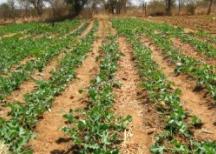
For the past couple of years, there have been many questions raised concerning the Ethiopian dictatorship’s numerous foreign ‘investment’ deals involving millions of hectares of farmland[1] and a border agreement with the Sudan[2]. Except for those who secretly concluded the so-called farmland ‘leases’ or sales, or signed the border ‘demarcation’ agreement with the Sudan, the negotiation processes and the complete text of the agreements remain shrouded in a veil of secrecy behind a dense fog of official cover-ups, hush-ups and whitewashes. None of the deals and agreements has been subject to public scrutiny. There is, however, sufficient evidence gathered by independent sources that raises many disturbing questions about the negotiation process and the terms and conditions of the farmland and borderland deals.
According to a study by the Food and Agriculture Organisation of the United Nations (FAO), the International Fund for Agricultural Development (IFAD) and the International Institute for Environment and Development (IIED), the official reports of the dictatorship with respect to the magnitude of the land deals lacks credibility[3]: ‘In Ethiopia, for example, enquiries at the state-level Oromia investment promotion agency found evidence of some 22 proposed or actual land deals, of which 9 were over 1,000 ha, in addition to the 148 recorded at the national investment promotion agency. It is possible to speculate that state-level agencies in other Ethiopian states may also have records of additional projects, and that some land acquisitions may not have been recorded at all… For example, in Ethiopia information about the land size of many deals proposed or concluded in 2008 was missing…’
There is further evidence to suggest official under-recording and misclassification to conceal the true nature and scope of the land ‘leases’ or sales. The FAO/IFAD report states: ‘An investment by German company Flora EcoPower in Ethiopia was reported to involve 13,000 ha (hectare), while it is recorded at the Ethiopian investment promotion agency for 3,800 ha only.’ Moreover, the dictatorship intentionally misclassifies the lands ‘leased’ or sold to the foreign ‘investors’ as vacant ‘wastelands’ (that is unoccupied by anyone or just wilderness) in an effort to conceal the fact that inhabited lands are part of a grand land giveaway scheme to foreign ‘investors’.
The FAO/IFAD report specifically points out: ‘In Ethiopia, for example, all land allocations recorded at the national investment promotion agency are classified as involving ‘wastelands’ with no pre-existing users. But this formal classification is open to question, in a country with a population of about 75 million, the vast majority of whom live in rural areas. Evidence collected by in-country research suggests that at least some of the lands allocated to investors in the Benishangul Gumuz and Afar regions were previously being used for shifting cultivation and dry-season grazing, respectively.’
On 21 May 2008, Meles Zenawi publicly described his agreement with Omar al-Bashir as follows: ‘We, Ethiopia and Sudan, have signed an agreement not to displace any single individual from both sides to whom the demarcation benefits…We have given back this land, which was occupied in 1996. This land before 1996 belonged to Sudanese farmers. There is no single individual displaced at the border as it is being reported by some media.’
Zenawi insists on keeping the actual agreement shrouded in absolute secrecy. There is no reason whatsoever why the border agreement should not be made public in its entirety. If the agreement is made public, it will either provide support to Zenawi’s claims or negate them, demonstrating that he is misrepresenting facts. The cloak of secrecy surrounding this agreement raises many questions: Why isn’t the text of the formal agreement between the two countries available for public scrutiny? What are the specific terms and conditions concerning the border demarcation lines and the rights of individuals living along the border made public since then that would be the best evidence of the vicarious representation of them made by Zenawi? Why wasn’t the agreement ratified by the House of Peoples’ Representatives as mandated by the Article 55, Section 12 of the Constitution of the Federal Democratic Republic of Ethiopia which states: ‘House of Peoples’ Representatives… shall ratify international agreements concluded by the executive’? What conceivable ‘national security’ exceptions apply to an agreement which has been a subject of public commentary and explanation by the head of the dictatorship? What conceivable justification exists to keep secret an agreement that merely marks the international borders of the two countries and protects the rights of the population in the border?
The simple point is that the runaway farmland and borderland giveaway deals need to be publicly scrutinised to ensure transparency, detect corruption and criminality and to make certain that private interests (sweetheart deals) have not overtaken the public interest, or secret deals are not made to harm the Ethiopian national interest.
Mr. Zenawi: Tear down the stone wall of secrecy around your farmland and borderland deals! The Ethiopian people have a right to know, and you have a compulsory legal duty to ensure that they have ‘access to information of public interest’. (See, Constitution of the Federal Democratic Republic of Ethiopia, Article 29 (3) (b) and Article 12, Section 1 – ‘government activities must be open and transparent to the public; Article 13 of the United Nations Convention Against Corruption (2003), ratified by Ethiopia on 27 November 2007.
‘Legitimate governments would not withhold information from their citizenry.’ Ghanaian vice president, John Mahama
BROUGHT TO YOU BY PAMBAZUKA NEWS
* Alemayehu G. Mariam, is a professor of political science at California State University, San Bernardino and an attorney based in Los Angeles.
* This article was first published in The Huffington Post 16 February 2010.
* Please send comments to [email protected] or comment online at Pambazuka News.
NOTES:
[1] http://www.ethiomedia.com/adroit/2420.html
[2] http://abbaymedia.com/News/?p=1458
[3] http://tiny.cc/Zh5A3 See pp.40-1,62,78-80
- Log in to post comments
- 776 reads
Author

Anonymous (not verified)