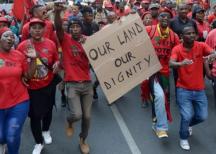












Solidarity from churches in Germany has made it possible for South African shackdwellers movement Abahlali baseMjondolo to elect a delegation to attend the World Urban Forum in Rio de Janeiro, the theme of which is ‘the right to the city’. In a preparatory meeting for the forum, Abahlali notes that 'if there is a "right to the city", it is a very difficult right to actually get. And it is we, the poor who struggle for it, who are paying the price for this right… For the right to the city to be real what will have to count will be people and not money.’
The forthcoming World Urban Forum provides an opportunity for the shackdwellers movement Abahlali baseMjondolo to meet with other poor people's movements from Rio and around the world. The document below comes out of a University of Abahlali base Mjondolo seminar held to discuss ‘the right to the city’ in advance of the meeting in Rio:
NOTES FROM A MEETING OF ABAHLALI BASEMJONDOLO IN PREPARATION FOR THE WORLD URBAN FORUM (WUF): ‘THE RIGHT TO THE CITY’
It is our usual practice when we send delegates to other people's meetings that we get together as a movement and discuss our collective view so that our delegates can take a mandate that is based on our 'home-made' politics. In this case there will be chances for our comrades to connect with other movements from around the world as well, so it is all the more important to be clear on our own home-cooked politics of Abahlalism – our 'living politics'.
Our movement's 'living politics' is the politics of the daily life and thinking of shackdwellers in South Africa who fight for truth and for justice. It is quite simply living out in the real world the practical meaning of the basic idea that 'everybody counts'. In our discussion we think through the connections between our 'living politics' and the theme of the WUF: 'the Right to the City'. If 'everyone counts', then surely there should be a right to the city! In fact, that theme sounds very much like a slogan of people's struggles for justice in cities around the world – but we know that the slogans of people's struggles often get taken and tamed by the powerful and rich; and we know that when that happens, the real politics at the heart of the struggles is usually lost. Some of the ways that the militant slogan of the 'right to the city' can get taken and tamed are when:
- It can be reduced to a 'technical' issue of working out how the state system can 'deliver' services and amenities to the people
- It can be turned into a legalistic issue of 'human rights' fought over in the courts of law between lawyers
- It presents the only possible solutions in terms of 'participation' in 'good governance' as defined by the power-players in the system of the state and the political parties.
In our own struggles as Abahlali baseMjondolo (AbM) we have taken up all of these avenues and issues to fight for justice for shack-dwellers – but our living politics and our total struggle does not start and end in these limited definitions and confined spaces.
In the systems of the government and the political parties it happens again and again that the things the people have fought hard for are taken by those who claim to be leaders and given back to the people as 'delivery'. The people have their muscles and their thinking – but they do not have control over the money and resources like government and parties have. The politicians, and especially the local councillors, use this power and then claim that they were the ones who worked so hard to achieve these things! The systems of municipalities and councillors are against our living politics. They are an oppressive burden on us, keeping us down. No-matter how we try to deal with them, they know they have certain kinds of power and resources to take our issues and 'deliver' to the communities. When they do this, they even make us look like we who struggle are actually working for the councillors! We know that the councillors in the local governments and municipalities come from the political parties. That means that they will always try to do their homework and find out what the people at the grassroots are struggling for because they will want to come with a strong agenda for the party to look like they are the ones who can 'deliver' what the people want. As deployees of the political parties, they are intent on crushing us politically and taking our issues over to their agenda. This is a huge challenge, and we must and we will fight harder against it because we know that municipalities are a problem – and that the solution is in the struggles of the people, with their muscles and their thinking.
It is a kind of theft – to take away the valuable things of the people and to put them to work in a system that is against the people but in favour of the powerful and the rich. Not only the municipalities and the politicians but also many of the NGOs and 'civil society' structures and activists are guilty of playing a part in this ongoing theft against the people. It can make you feel like your struggle was useless. You fight for justice – for equality and for the world to be shared – and you end up with the promise of ‘service delivery’.
Against this theft and oppression, it is important that our struggle remains always our own and that we hold on to our autonomy. When we look at the official letters from the WUF we see that the government of Brazil and its President Lula is also inviting and hosting us – this is a surprise for us as a movement. We know that some of the movements there get funding from the government. For us, this should be debated and it makes us wonder what is the motive for having this event in Brazil. The poor people’s movements in Brazil are very strong in rural areas and in the cities. They occupy land and city buildings to appropriate housing and shelter for the poor. But then some of them also get funding from the government! Is the agenda behind this WUF to push the idea that government and the social movements can or must work together? For us as Abahlali, although we are not aiming to overthrow our government, it is very clear that we have different ideas from the government. Our government gives us a very hard time and we are in conflict with them. So is there really such a big difference between our government in South Africa and the government of Brazil? What we do know is that almost all politicians claim to speak for the poor, claim to be concerned about the poor. So invitations like these are really because they like our tears. When they can show our tears to the world, they can carry on with their plans and carry on saying that the tears of the poor justify their plans. We don't trust that government of Brazil, nor our government in South Africa, nor any other government. We remember that Presidents Lula and Zuma met each other and agreed that their plans were just the same. Anyway, going to the WUF is more important as a chance to meet and talk with other movements of poor people from cities around the world and to strengthen each other's struggles.
The Department of Human Settlements from our government will also be at the WUF and presenting some papers – but we will be there too and we will tell a different story. The Department will pick and choose what they present about the situation of land and housing in our cities. They will display to the world the good things they can show to create the impression that South Africa is a great place to live. Our task is to tell the truth against this lie.
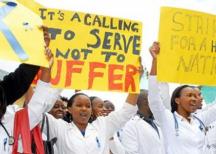
Truthfully speaking, is there any 'right to the city'? Is the life we are living really giving us a 'right to the city'? If there is a real 'right to the city', why are we facing evictions on such a massive scale? Why must we beg to the courts for our rights? Why are our rights to organise, speak and march so violently repressed?
No, if there is a 'right to the city', it is a very difficult right to actually get. And it is we, the poor who struggle for it, who are paying the price for this right – and it is a very high price to pay to access any meaningful and broader idea of our right to the city. Just look at the cost of the attacks on our movement in Kennedy Road last year. The price is still being paid by people who have been made homeless refugees in their own country, and by the comrades still being held in prison without trial since those attacks. The world must see and hear from us what the price of the fight for a real right to the city is. The world must know that those who voice out the truth are attacked, silenced, slandered, threatened and imprisoned. The world must know that there is no real difference between the apartheid government and this one we have now.
Mega-events to entertain the elites like the FIFA World Cup also show clearly that for the poor, there are no real rights to the city. To put on their games in the way the rich want them, means that poor people have to be swept away, and poor traders forced off the pavements – all this simply to make sure that the rich get richer and the poor get poorer. We see the same things when we look at the growing number of golf-courses and golf-estates that are mushrooming. Poor people are squashed together in crowded settlements or are without housing, and some are forced out of their places to make way for these elite play areas. In the world as it is now, what counts is not that everyone is a person – what counts is whether you have money. In our cities, the powerful and rich elites chase their dream of a 'world class city', and in their 'world class city' what counts is money. For the right to the city to be real what will have to count will be people and not money.
If the right to the city has such a high price, is there any hope then? Yes – in the movements of the poor that are organising; in the work of our delegation that will go to Brazil; in all of our work to really transform the world as it is. Even through the work of our shack dwellers’ movement, Abahlali baseMjondolo, we have won important victories – like defeating the Slums Act in the Constitutional Court. But since that victory, the attacks against us have shown that we have to carry on, we have to organise and build the movement even more, and we have to work twice as hard as ever before. There is really no such thing as a 'right' that can be given to you by a government or NGO. As the poor we have to organise ourselves to increase our power and to decrease the power of the rich and the politicians. The only way to succeed in making the right to the city a living reality for everyone instead of a slogan which repressive governments can hide behind is to democratise our cities from below.
Uyishayile!
BROUGHT TO YOU BY PAMBAZUKA NEWS
* Please send comments to [email protected] or comment online at Pambazuka News.
- Log in to post comments
- 1144 reads
Author

Anonymous (not verified)