














Almost two decades after the genocide in Rwanda, in which up to 1 million people died, hundreds of thousands of survivors are still waiting for reparation, writes Juergen Schurr.
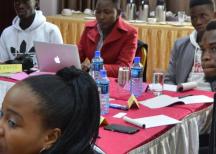
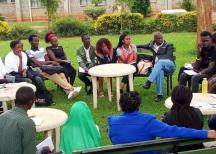
At a conference organised in Kigali last month by three organisations that work with genocide survivors - REDRESS, African Rights and IBUKA – survivors stressed once again that they considered that justice without reparation is not justice.
Attempts to provide reparations for survivors have largely failed so far. Before 2001, Rwandan courts awarded millions of dollars in compensation to thousands of survivors who had brought civil claims against individual perpetrators and the Rwandan Government, which were heard at the same time as domestic genocide prosecutions.
As of today, none of these judgments have been enforced and survivors have yet to receive reparation. Similarly, awards made by local gacaca courts to compensate survivors for material damages were only enforced in a few cases, as perpetrators were indigent, refused to pay or bribed those in charge of the execution of judgments to avoid payment.
After recognising that compensation awards could not only depend on the perpetrator’s ability to pay, in 2001 the Rwandan Government drafted a bill on compensation that sought to establish a compensation fund. However, this bill was never adopted and no compensation fund was ever created, though a humanitarian fund to support needy survivors has been in operation for some time.
At the international level, the International Criminal Tribunal for Rwanda (ICTR), established by the UN Security Council in November 1994 to try the masterminds of the genocide, doesn’t allow survivors to claim compensation. Their role before the Tribunal is limited to that of witnesses.
In 2000, the then president of the ICTR, Judge Pillay, urged the Security Council to consider establishing a specialised agency to assist survivors to receive compensation. According to her, compensation for victims was essential if Rwanda was to recover from the genocidal experience. However, this was never put in place.
The right to reparation for survivors of the most serious crimes is well established in international human rights and humanitarian law. Even though it is impossible to fully compensate for crimes such as genocide, compensation is important for survivors as it can serve as an acknowledgment of the crimes that were committed and allow survivors to move on with their lives in dignity.
In their response to the genocide, the Rwandan Government and the international community have prioritised until now the large task of bringing genocide suspects to justice. As part of their efforts, 1.5 million perpetrators have been convicted in Rwanda so far, according to the Rwandan Government, and a further 38 by the ICTR in Arusha. Less vigour has been applied to find avenues for reparation.
The Rwandan Government has stated that it simply lacks the means to afford reparation. It has also emphasised that it already contributes 6% of its budget to the national FARG fund. The Fonds National pour L’Assistance aux Rescapés du Génocide provides critical education, health and housing assistance to those survivors most in need, yet the vast majority of survivors do not qualify for the funds.
Survivors participating in the conference in Kigali said that they believed the Government of Rwanda should be responsible for establishing a compensation fund. They also thought that resources of the fund could come from the state budget as well as contributions from third countries, the international community, and assets of convicted perpetrators.
Survivors also expressed their fear that with the closure of the gacaca courts this December their right to reparation will be ignored forever. Then, genocide cases will be prosecuted before ordinary courts, and it is still unclear what impact this will have on survivors’ right to claim for compensation.
The fact that the government is drafting legislation to establish a mechanism that will handle issues that have not been addressed by the gacaca courts offers an opportunity to include at last a clear provision for compensation. These efforts should be encouraged as without adequate reparation, accountability efforts run the risk of being meaningless to survivors.
BROUGHT TO YOU BY PAMBAZUKA NEWS
* Juergen Schurr is legal advisor and expert on universal jurisdiction at REDRESS, a London-based NGO that helps torture survivors worldwide obtain justice and reparation. More information about the organisation can be found at www.redress.org
* Please send comments to editor[at]pambazuka[dot]org or comment online at Pambazuka News.
- Log in to post comments
- 4168 reads
Author

Anonymous (not verified)