




















Lucy Hovil reports about the uncertain future of thousands of Burundian refugees in Tanzania who are under increasing pressure to return home against their wish. Tanzania has set a new deadline for return, after which the government will force them out
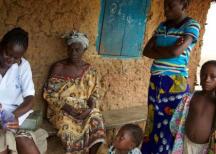
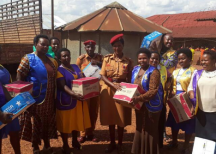
Thousands of Burundian refugees in Tanzania are coming under increasing pressure to return ‘home’. The most visible group of refugees, those living in Mtabila camp (one of the last camps remaining open in Tanzania), have been resisting return for more than two years despite significant pressure from the governments of Burundi and Tanzania.
Although a number of deadlines to return have already passed, a new date of 31 December 2011 has now been set; and this time, the deadline has been reinforced with the threat of cessation. Cessation is the mechanism in refugee law through which refugee status can be withdrawn in situations in which there is no longer need for international protection. And there is serious concern that should cessation be invoked, it will lead to the forcible repatriation of approximately 38,000 refugees who remain in the camp.
Under international law, the return of refugees to their country of origin must be voluntary. However, serious questions need to be raised given the voluntariness of this particular exercise. Findings from a recent visit to the camp show that refugees are feeling under considerable pressure to repatriate. In fact, many said they have been told unofficially that they will be repatriated by force if they refuse to go ‘voluntarily’. This pressure is evidenced by the refugee’s understanding that refugee status may be withdrawn if they opt to stay (removing their protection against deportation), that the camp will be closed, and that services in the camp will continue to be severely limited.
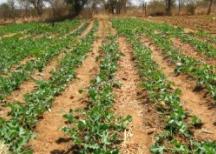
As a result, these refugees are living in a state of poverty and fear. In order to ‘encourage’ refugees to return, services have been steadily withdrawn from the camp, and refugees are not allowed to subsidise their rations: they are forbidden to do anything that is income-generating, including any form of cultivation, and thick vegetation is growing up around refugees’ homesteads. The camp commandant, apparently, is enforcing this.
The camp authorities have also closed down all the schools that had previously been available to refugee children. When refugees attempted to set up informal schooling for their children as an alternative, this was considered ‘illegal’ and was stopped by the authorities. Not only does this policy violate the fundamental right of children to basic education, it also contributes to the perception that this small piece of Tanzanian land increasingly exists outside of national and international law. As a result, many families are suffering the social consequences associated with children having nothing to do.
Freedom of movement is also restricted. Earlier this month, more than 100 refugees from Mtabila were arrested by Tanzanian authorities accusing them of leaving the camp: many were apparently in the 4km zone outside the camp where they understood that they would be able to circulate. Restrictions on freedom of expression are also adding to the climate of fear, as evidenced by the clandestine way in which the interviews had to take place during our research.
Events that took place on World Refugee Day when a delegation of government, UN and non-governmental organisations personnel came to Mtabila confirm this. Apparently a refugee choir sang a song that included the words, ‘We did not pay money to become refugees, it is not a blessing for anybody’. Officials from the government of Tanzania, taking the view that this song was insulting and undermined the theme of the day (‘the future of our lives resides in our own country’), proceeded to ban the choir from singing any more songs and its members were summoned to the camp commandant to explain themselves. If singing songs of mild protest is treated almost as a criminal offence, it is hardly surprising that refugees believe that they will not be permitted to freely express their opposition to return.
So why, after hosting refugees from across the region for decades, is Tanzania putting so much pressure on these refugees to repatriate? Although the answer to that question is likely to be complex and multi-faceted, it is certainly true to say that it reflects a broader trend in large-scale repatriation initiatives in the Great Lakes region. After decades of conflict, the region is seen to be in a new era of relative stability and governments are keen to remove the refugee ‘burden’ of the past decades. The government of Tanzania is frustrated that the end of the civil war in Burundi has not resulted in the dutiful return of all refugees, no doubt exacerbated by the fact that the government has offered almost 200,000 Burundian refugees who fled in 1972 the option of naturalisation.
For sure, if one puts aside the fact that governance in the region ranges from poor to chronically repressive, and that there is ongoing violence in many areas such as in eastern Democratic Republic of Congo, the logic of repatriation makes sense: countries that in the last decade had generated large flows of refugees now appear to have reached greater stability, and it is time for everyone to go back to where they came from. After all, no-one actually wants to be a refugee and, despite the many problems associated with ‘home’ it is unlikely that anyone would choose to stay in a refugee camp – designed to keep you separate from the host population, existing on hand-outs that constantly remind you that you do not belong – unless there was good reason for doing so.
However, for many people across the region going home is not seen as viable: there are multiple reasons why it is suboptimal, or even dangerous, for them to return. As a result, a number of individuals and groups of refugees continue to resist return, including those living in Mtabila. These refugees have chosen to contend with increasingly difficult living conditions in Tanzania rather than return to Burundi. And if the camp really should close in December, they will be forced to choose between going home to Burundi and living clandestinely and illegally in Tanzania, becoming so-called ‘irregulars’. This predicament raises not only serious questions with respect to the legality of the current effort, but also its durability and effectiveness as a long term solution.
BROUGHT TO YOU BY PAMBAZUKA NEWS
* Lucy Hovil is Senior Researcher, International Refugee Rights Initiative
* This article is based on a longer report, launched on 4 October 2011. Read the full report here.
* Please send comments to editor[at]pambazuka[dot]org or comment online at Pambazuka News.
- Log in to post comments
- 1510 reads
Author

Anonymous (not verified)