





















One, infinite growth on a finite planet is an exercise in futility. And two, the 20 percent of the world's population living in North America, Europe, and Japan gobbles up 80 percent of the Earth's natural resources. These are the elephants.
A close friend of mine in Fairfax, Virginia, is expecting her first child. By the time this baby girl turns 60, she'll live in a world that's warmer than it's ever been since humans began walking the Earth 2.5 million years ago, according to a new study.
The world already looks much different than it did just a generation ago. The alarming rate at which plants and animals are disappearing has scientists asking if we're entering a sixth mass extinction. The oceans' fish stocks - the main source of protein for more than a billion people - are declining, and mysterious coral reef die-offs in recent years will likely make a bad situation worse. More than half of the planet's surface now has "an obvious human footprint."
This is exactly where world leaders hoped we would not be when they gathered in Rio de Janeiro, Brazil, for the historic 1992 Earth Summit.
Twenty years ago, decision-makers knew human activity could hurt the environment. But they were also grappling with the fact that about half of the world's population was living in poverty, and needed access to land, water, food, dignified work, and other essential ingredients for a better life.
To bring these two realities together, the Rio summit embraced "sustainable development" - an economic model that meets present needs without compromising the ability of future generations to meet their own needs. Governments adopted a roadmap for sustainable development heading into the 21st century called Agenda 21 and launched global environmental agreements on biodiversity, climate change, and desertification.
The global community is gathering in Rio again to face the painful fact that little progress has been made. In the back of everyone's mind is the global financial crisis, destabilizing economic inequality, and a lack of political will to do anything perceived as threatening corporate competitiveness.
What went wrong? Part of the answer is that the original Earth Summit avoided two of the biggest elephants in the room. One, that infinite growth on a finite planet is an exercise in futility. And two, that the 20 percent of the world's population living in North America, Europe, and Japan gobbles up 80 percent of the Earth's natural resources. It doesn't seem likely that Rio+20, as this new meeting is known, will recognize those elephants either.
The leaders heading to Rio are touting a mythical new "green economy" they say will solve all our climate challenges. While still ill defined, they're generally referring to a model of economic growth based on massive private investment in clean energy, climate-resistant agriculture, and ecosystem services - like the ability of a wetland to filter water. Under this new concept, Wall Street gets to reap profits from a whole new line of business, and governments get to spend less protecting the environment.
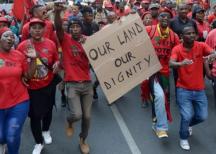
Not surprisingly, peasant farmers, indigenous communities, anti-debt activists, and other grassroots groups reject this "green economy" rubric as corporate "greenwashing."
The fear - echoed by many environmentalists and anti-poverty groups - is that by putting a price on things like water or biodiversity as a way of managing their use, we turn them into commodities and risk having basic needs and services fall victim to speculators who make money off volatile prices.
Think about it. Does it make sense to put the future of our remaining common resources - forests, genes, the atmosphere, food - into the hands of people who treated our economy like their personal casino?
It's no coincidence that when people are in charge of managing the land and water they live and depend on they do a better job than some hedge fund manager in a remote office building. Instead of concentrating decision-making power about nature in the financial sector, the Rio+20 summit should support local, democratic control of natural resources.
That way, when my friend's daughter is old enough to vote, she'll have a planet worth fighting for.
* BROUGHT TO YOU BY PAMBAZUKA NEWS
* Please do not take Pambazuka for granted! Become a Friend of Pambazuka NOW and help keep Pambazuka FREE and INDEPENDENT
* Janet Redman is the co-director of the Sustainable Energy & Economy Network at the Institute for Policy Studies. www.ips-dc.org This article was first published on: http://www.otherwords.org/articles/the_elephant_in_rio
* Please send comments to editor[at]pambazuka[dot]org or comment online at Pambazuka News.
- Log in to post comments
- 1040 reads
Author

Anonymous (not verified)