













The Democratic Left Front calls for action against destructive corporate interests that are driving the commercialisation and commodification of the natural environment.
As a South African eco-socialist organisation which actively mobilised at the Durban COP17 Summit, the Democratic Left Front (DLF) issues this statement in response to the concept of the ‘Green Economy’ and other outcomes of the recently concluded Rio+20 Summit which was held in Rio de Janeiro from 20-22 June 2012. This statement also puts forward the DLF platform for a just transition to a low carbon economy and a call to action for a climate jobs campaign.
THE GREEN ECONOMY
In the face of widely recognised dangers and threats of ecological collapse and climate change, the outcomes of the Rio+20 Summit failed to effectively regulate and place limits on the capitalist market. On the contrary, powerful transnational corporations and international business councils, increasingly over-represented in inter-state multilateral negotiations, successfully pressed for the ‘marketisation’ which will amount to a dramatic expansion of the commercialisation and commodification of the natural environment and its life services. At Rio the elites considered policies of placing a monetary value on nature’s environmental services, offsetting and trading these on markets, via credits, much like the controversial carbon trading mechanism. The sustainable development goals agreed to at the Rio+20 Summit are subordinated to this pervasive logic of marketisation. In effect, genuine sustainable development has therefore been denuded of meaning and is not supported by concrete measures to move away from the logic of capitalist growth that destroys irreplaceable ecological resources.
The DLF strongly believes that the ‘Green Economy’ punted at the Rio+20 Summit is a new greenwash justifying the continued profit-making from nature. Through the promises of being environmentally friendly and providing jobs, the Green Economy is as seductive as the concept of sustainable development and as potentially divisive while being just as illusory and elusive. We caution our sisters and brothers in civil society to not be fooled. The Green Economy is about the transformation of nature, her environmental services, and life itself into a product to be marketed and sold as if it was a packet of potatoes. We are made to believe that the very processes that have brought us to the crisis – extreme marketisation - can somehow overcome the crisis. Blue carbon, the commercialisation of the ocean as a carbon sink, especially related to mangroves, tidal salt marshes and seagrass meadows etc. is being trumpeted under the slogan of the green economy, as the solution to the climate crisis. Extreme technologies such as geo-engineering and nanotechnology under the monopoly control of giant corporations are promoted as instruments to solve the ecological crises. All this, as opposed to taking the necessary steps to moving to a low carbon economy; overseeing a just transition that dramatically expands decent work in the service of humanity and the biosphere as the first steps to consolidating an alternative paradigm of what Latin American indigenous communities refer to as ‘buen vivir’ – living well.
THE GREEN ECONOMY IN SOUTH AFRICA
Since the COP17 Conference in Durban, the South African government has rolled out a massive media and publicity campaign promoting the Green Economy. The South African government has promised hundreds of thousands of green jobs and huge investment in green projects such as clean renewable energy. These promises were repeated by the South African delegation at the Rio+20 Summit. Like many ANC government promises the Green Economy promises are not being met and in some cases they are a diversion from reality. Investment in renewable energy, crucial to reduce South Africa’s very high emissions of greenhouse gases (GHGs), is dwarfed by investments in more dirty coal-fired energy, coal to gas and dangerous nuclear energy. In essence, the South African government pays lip service to the Green Economy. All its policy positions on the Green Economy are subordinated by its fundamental policy commitment to the continued and accelerated extraction and export of minerals including coal. All the major infrastructure programmes announced by President Zuma at the State of the Nation Address in February are about ensuring efficient public infrastructure to enable seamless extraction and speedy export of minerals such as gold, coal, platinum, uranium, iron ore, titanium and others. This mining-dependent development path will continue to rely on the provision of coal-based electricity as a cheap input. In addition, the fracking of shale gas is likely to be approved by the South African government. Fracking will further intensify South Africa’s mineral energy economy to the detriment of the environment and society, and much against the logic of a Green Economy.
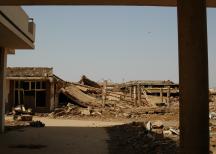
Already, the ecological damage from previous waves of mining in South Africa can be seen in the destruction of our freshwater sources through acid mine drainage, pollution of lakes and rivers through heavy metal deposits, the reduction of vast areas of arable land to wastelands through soil acidification, and radioactivity arising from uranium waste. The social damage caused by extractivism is increasing as communities are shunted from land in favour of mining prospectors, thousands of ex-mine workers left to die alone from lung and other diseases acquired in the mines and hundreds of current miners killed as profits trump health and safety.
DLF PLATFORM FOR THE TRANSITION TO A LOW CARBON ECONOMY
It is clear to us almost two decades into the new South Africa that for the majority of people and the environment – capitalism is not working and is extremely destructive. This is increasingly evident at a global level. The financial crisis that broke out in 2008 is a symptom of a much wider crisis of the global system. Not only does it represent a crisis of the neoliberal model but a deeper crisis of the over-productivist, endless-growth, financial-speculative model which puts humanity and the planet at great risk. In this regard we are confronted by a simple but stark reality, namely, that an economic system based on unlimited growth contradicts a limited planet.
Capitalism, a system based on the drive to accumulate more and more (endless and unlimited growth) – is at the root of these crises. Since the 1992 Earth Summit held in Rio de Janeiro and accelerating after the 2002 World Summit on Sustainable Development has been the imposing of a system of free market capitalism freed from all externalities – no longer having to consider social, health, labour and environmental ‘boundaries’. It is our view that the deepening environmental crisis reflected in accelerating climate change, mass extinctions of plant and animal species, rapid deterioration in biodiversity, acidification of the oceans, deforestation, and freshwater pollution are explained by the dynamics of the global capitalism enabled by national states that has set humanity up against the limits of the planet and which is undermining attempts at arresting the global crisis. Capitalism cannot be green. It is not in the interests of humanity and our planet. We urgently need alternatives.
As the DLF we strongly believe that:
· The people are the guardians of land, life and love;
· The rights of people and those of mother earth must be recognised and realised;
· In the struggle to preserve nature the basic needs of those living in nature must be respected;
· Humanity must live within environmental limits;
· Thousands of years of local knowledge must be preserved as a common good against the threat from corporate bio-piracy;
· The ecological crisis as a direct outcome of accumulation for accumulation’s sake cannot be solved within the same logic and parameters;
· Those who are responsible for the crisis should be held to account and made liable for ecological rehabilitation and pay reparations to affected communities and peoples; and
· Sustained mass struggles and campaigns are the foundations upon which alternative paradigms are already being constructed.
We demand:
· The recognition of the rights of Mother Earth in legally binding national and multilateral legal instruments;
· Democratic collective ownership and control of what we produce and how we produce and what we consume;
· An end to the export model of development which is a major cause of both the ecological and economic crises as it opens up a dynamic of a race to the bottom;
· A movement towards a planet free of extractivism and that the use of our natural resources through mining or any other method is done in accordance with the principles of democracy, renewability and sustainability;
· Policies that protect our indigenous seeds, open pollinated varieties and are against genetically modified organisms;
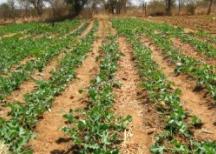
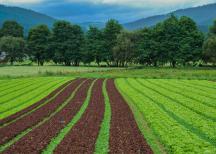
· Policies that promote agro-ecological methods that guarantee food and seed sovereignty and indigenous knowledge;
· A state-driven shift away from fossil fuels to a low carbon economy through the creation of millions of climate jobs;
· The dismantling of transnational corporations through stringent regulations and the scaling back of their operations from the commons and to areas of the economy that do not impact on nature and her environmental services.
We call upon:
· Popular movements and organisations, poor and working people to reject the corporate driven concept of the Green Economy and its agenda of profiting from the commodification of nature and her environmental services;
· All our people to mobilise in defence of the commons, especially the protection of our land, forests, atmosphere, rivers, oceans, our culture and knowledge resources under democratic public ownership and control
· Popular forces and movements to occupy the United Nations and its multilateral processes such that we push back against corporate interests and control;
· Our people to mobilise, attend and speak out against corporate interests that profits from the destruction of the planet;
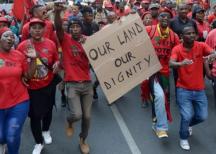
· Our people to mobilise in mass action and stand in solidarity and raise our fists and voices against the leaders of the global elites on our vision of eco-socialism that is based on social, economic and environmental justice.
To take forward the above, the DLF is building a mass campaign for climate jobs in South Africa. We call on civil society and popular organisations to join this campaign. This campaign will be launched in the last quarter of 2012.
* BROUGHT TO YOU BY PAMBAZUKA NEWS
* Please do not take Pambazuka for granted! Become a
Friend of
Pambazuka and make a donation NOW to help keep Pambazuka FREE
and INDEPENDENT!
* Democratic Left Front - www.democraticleft.za.net
* Please send comments to editor[at]pambazuka[dot]org or comment online at Pambazuka News.
- Log in to post comments
- 1817 reads
Author

Anonymous (not verified)