
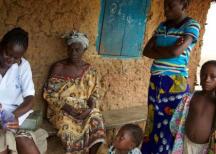
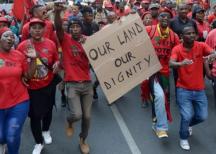

















Accomplished female leader Betty Mould Iddrisu shares her top 10 lessons about leadership on the continent and the difficulties women have to overcome to reach - and stay - on top.
There is a harsh reality about women’s leadership in Africa. I have dreamt it and lived it. Gradually, women are penetrating historical barriers that have up till very recently been closed to us, barriers that limited women’s attainment of the highest levels of power and leadership in important sectors of society. Daring to aspire or reaching heights that very few women have attained can be remarkably fulfilling, but also so revealing - with mixed experiences, unique perspectives and at times come with inexplicable disappointments. I have the laurels and scars to show for my leadership journey. And through it all, here are a few things I have come to know for sure:
1. TOO FEW AT THE TOP AT NATIONAL AND REGIONAL LEVELS - MULTITUDES AT FAMILY AND LOWER LEVELS
Even at an all time best record of two female presidents, a woman prime minister and women occupying 19.7 per cent of parliaments across the continent, everyone would agree that these numbers of women in higher levels of politics - symptomatic of female representation in other sectors of society - are woefully low by any standards of fairness, equity or democratic principles of participation. No question, there have been significant moments and achievements to be proud of - the African countries of Rwanda, South Africa and Mozambique are among countries with the highest percentage of women in parliaments, however we are nowhere near where we need to be. And the higher-up I have climbed in my leadership journey, the more apparent this harsh reality has appeared. We must always applaud the valuable contributions of women at the lower and mediums levels, but we need to be at that high-table to partake, contribute and share in the power of shaping our national and regional destinies. We may be making significant progress, but I know for sure the status quo is neither fair nor acceptable.
2. DIFFICULT ROAD TO CLIMB AND EVEN MORE DIFFICULT TO STAY AT THE TOP WHEN YOU ‘ARRIVE’
African women suffer systemic prejudices in making their way to the top. Firstly, we are not taken seriously because men believe a woman is intrinsically less competent than their male counterpart. The incidence of sexual harassment both at the tertiary level and in the workplace are very well documented, impeding women’s progress overall. Additionally, the duties of motherhood can be crushing - if not managed carefully. Most men believe that women should take the primary responsibility for the care of the family so late working hours, weekend seminars, overseas and business trips which contribute to any workers upward mobility are very difficult for younger working wives and mothers. Arrival at the top tier is rare and when you are there you are usually faced with hostility and disbelief in your competency as a female. A woman at the top works so much harder than her male counterparts to prove her competency and yet is still faced with ingrained prejudice and hostility to her playing the role of a boss or leader in a largely male dominated working environment.
3. WITHOUT SUPPORT YOU CANNOT MAKE IT
Politics - corporate or party - is cruel and generally unforgiving. Nowhere is this more evident than for women in Africa. Since a woman’s role is generally thought of as to be supportive to her husband and family the hard knocks and politics of insults which generally characterize public leadership are not palatable to a politicians family and such women are thought of as bringing ‘shame and disgrace’ to their families. Women leaders and politicians need the support of their sisters, mothers, grandmothers, aunts, classmates and cannot thrive without their active and vocal support. Women are generally thought of not to be supportive of each other and experience of many women leaders shows this to be a harsh reality. It takes a lot of inner strength and thick skin.
4. TOO MANY BARRIERS TO BREAK THROUGH DESPITE PROGRESS IN SEVERAL CRITICAL AREAS
Despite the remarkable progress, despite the many breakthroughs, and despite the increasing awareness and acceptance of women’s leadership in Africa, there still remains far too many obstacles impeding a woman’s leadership and her upward mobility. Traditional African society is still hedged by a myriad of barriers designed to maintain women’s subordinate status in society. Inimical and cruel customary practices towards women, disproportionate access to education resulting in the girl child not being enabled to go and actually stay in school and endemic poverty affecting the rural peasant woman are all barriers which contribute towards keeping women out of active leadership roles on the continent. Most of the legal barriers towards women’s progress have been overcome or reversed across the continent especially over the past 30 years. The challenge then comes with shedding outmoded perceptions of women’s role in society and this can only come with time and a ‘can do’ attitude. Forward, we are moving, but I know for sure there are still many barriers to break through.
5. TRADITIONS NEED NOT HOLD US BACK - THEY CAN BE CATALYTIC
Traditions are not supposed to be stagnant - they can be used as tools of change. This change is usually spearheaded by the women themselves. Some aspects of African tradition attempt to keep women silent, subordinate and second-class citizens, but many others uphold the dignity and sacred respect for womanhood. While conscious of the many harmful aspects of our traditions, I have always viewed and utilized the empowering dimensions of culture and tradition as a catalyst for positive change - to empower, to legitimize and to advance the African woman’s role in leadership. Culture can be used to hold us back, but we can also shape cultures in ways that are liberating. Much of African tradition, however, that may have been rooted in glorious cultures and histories, have been used by men to ambush women from realizing their full leadership potential, but I know for sure we can also find strength and opportunities in the values and dynamism of many of our cultures.
6. EDUCATION, THOUGH DESIRABLE, IS NOT EVERYTHING
Higher level education is a desirable but not a necessary pre-requisite to successful female leadership on the continent. Education commands an automatic certainty of status in society because it enables a woman to have a certain cachet. However, whilst I cannot emphasize enough its importance to every woman leader, I also know that formal education cannot provide all the tools you need to survive and succeed as a woman in higher-level leadership, but, more importantly, the lack of it does not disqualify a woman from excelling.
7. NO SUBSTITUTE FOR HARD-WORK, INNER-COURAGE AND DETERMINATION
Since there is an ingrained skepticism towards women’s ability to succeed in Africa, it means, simply put, that women leaders must work doubly hard. The path to success is littered with obstacles and it takes huge doses of courage and determination to stay the course. I know for sure that, with or without peculiar challenges, hard work remains a non-negotiable imperative for leadership success. And with the gender-specific challenges of prejudice and skepticism directed at women leaders, the African woman leader has no choice but to work hard with a determined spirit. No matter how qualified or charming, and no matter how motivated or spiritual, a woman leader is Africa needs to work harder then her male counterparts to be counted at all.
8. NETWORKING IS CRUCIAL
Complaints abound across the continent that women leaders do not assist in improving the status of their womenfolk in society. But only a woman, who has been at the top and has tried her very best to make a difference, would truly comprehend the extreme difficulties of being the only one of your kind up there. Women leaders need to and must continue to forge networks and alliances with the grassroots and civil society in order to be responsive to the needs of women at the grassroots and leadership. It is so lonely at the top of that ladder, but I know for sure that broader and stronger networks of grassroots, professional and civil society allies provide powerful forces you can surely count on.
9. NO MATTER HOW COMPETENT, EXPERIENCED AND POWERFUL, THERE ARE PECULIAR CHALLENGES THAT CONFRONT YOU
You are always viewed and judged as a ‘woman leader’ and not just as a ‘leader’. You are an African, a citizen and a leader, your ‘womanhood’ remains a pre-defined measure of society’s worldview of your leadership. Consequently, the challenges of being a woman leader are multiplied because you are an African woman; but the harsh realities of female leadership in Africa are myriad - factors such as the extremely low representation of women in politics and leadership at all levels, negative and cruel cultural and traditional practices, the subordinate status of women, lack of education and poverty levels are all challenges to be overcome in leadership.
10. YES, AFRICAN WOMEN CAN
If there is one thing I have come to know and believe beyond any count, it is the ability of women to lead - in any sector and any field or at any level. We may continue to excel - just as some men excel. We may continue to stumble along the way just as so many men stumble. We may even fail once in a while, just as men have historically failed. But I know for sure that we are capable, we have the right to and we can indeed lead this continent. YES WE CAN!
* BROUGHT TO YOU BY PAMBAZUKA NEWS
* Please do not take Pambazuka for granted! Become a Friend of Pambazuka and make a donation NOW to help keep Pambazuka FREE and INDEPENDENT!
* Mrs. Betty Mould Iddrisu is one of Africa’s most accomplished female leaders. She served as the first female Attorney General and Minister of Justice, and as Education Minister of the Republic of Ghana. She also served as the Director of Legal and Constitutional Affairs for the 54 member nations Commonwealth Secretariat, as a Law Lecturer and has been a leading voice on gender equality in Africa for over 30 years. She has a tremendous passion for empowering the new generation of African women leaders and professionals. Mrs. Mould-Iddrisu is currently a much sought after International Speaker, Consultant and Activist on law, politics and gender justice. www.bettymould.com
* Please send comments to editor[at]pambazuka[dot]org or comment online at Pambazuka News.
- Log in to post comments
- 12489 reads
Author

Anonymous (not verified)