



















The African Union has given notice that it is not going to continue its Peace Mission beyond the end of this month when the mandate expires. Khartoum's initial response was more or less: “Good riddance” though it has now 'modified' its position to include impossible conditions under which it may 'allow' the African Union troops to remain.
The Sudanese government wants the Mission to be financed by itself and the Arab League. This is obviously a condition that the AU cannot accept and has rightly refused to countenance. In addition, the Sudanese government has categorically rejected the UN Security Council Resolution 1706.
The African Union Peace Keeping Mission in Darfur has been faced with many challenges. One, the experience is new and consequently there were lots of obstacles to be dealt with. Two, the mandate was too limited, and, therefore, it has been unable to embark on peace enforcement that could have saved more lives. In a sense, it is an AU mission based on the old OAU fudge. Three, it never had enough resources to carry out its limited mission effectively.
But by far the biggest challenge is the bad faith of the Sudanese government. Also, too many external interests have been impacting on the conflict.
These challenges have contributed to the misconception that Africans cannot resolve their problems themselves. The fact that the Mission was put together was a positive step towards confirming that Africans and our political leaders were no longer prepared to be indifferent to the suffering of other Africans.
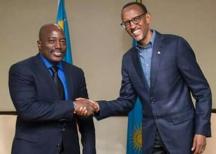
That Rwanda and Nigeria both immediately offered troops was also an expression of this Pan African Solidarity. Rwanda knows only too well the consequences of apathy and indifference. On the other hand, the Nigerians have always regarded Africa as the “centre piece” of the country’s Foreign Policy and have always sought to put their money where their mouth is.
I am not enamoured by Obasanjo at all but I must concede that he has remained consistent on Pan African Issues. In the case of Sudan, Nigeria has been engaged from time immemorial largely because both countries are superficially similar but also because there is a long association between the peoples.
The North-South ethno-regional - racialist and religious fault lines in Sudan are very familiar to Nigeria. Therefore successive Nigerian governments have tried to be peace-makers in Sudan. There is also the fact that there are a significant number of Sudanese people who may be of Nigerian origin.
One of the most difficult challenges that the AU had to confront was the limited nature of their mandate. Due to this weakness, the Sudanese government was able to outmanoeuvre the AU. It played the AU against the UN / USA and got a weakened intervention force.
The Sudanese government also exploited the United States of America’s low credibility and the anti-Americanism that Bush’s war without end continues to generate among many Africans and peoples of the world. The US is the only government that has officially declared that what is happening in Darfur is nothing short of genocide.
This should have put an obligation on both the US government and the rest of the member states of the UN to abide by the Geneva Convention. Neither the US nor the other states have discharged that responsibility. The US cannot do so because nobody will believe it, especially after it waged a unilateral war on Afghanistan and Iraq.
In practice, the AU force has been toothless because of the limited mandate. This should be enough reason to review the way in which the Peace and Security Council (PSC) operates. It is not a case for abolition - rather it is a case for wider reform so that it is able to intervene effectively.
The issue of resources have to be dealt with seriously. Almost all organs of the Union are handicapped by lack of money, not just the PSC operations. It is simply unacceptable and should be indefensible that we cannot fund the AU on our own given the enormous resources wasted by governments across this continent.
Why are we able, ready and willing to spend money on Presidential vanities and unjust wars but have no resources for peace and development? Why should anybody take us seriously if we do not take ourselves seriously?
However, whatever internal resources we generate, should not mean that Africa cannot and should not avail itself of global resources both material and immaterial. We are part and parcel of the international community. Any threat to our peace and security is a threat to the rest of the international community.
Africans have been helping to make, keep and maintain peace across the world from Bosnia to Lebanon, and, therefore there is nothing wrong in asking others to help us too.
It is clear that extremist elements are now in control of policy in Khartoum. Whether President Bashir is a willing or unwilling prisoner is difficult to say categorically. Sometimes politicians prefer to be seen as ‘powerless’ even as they may be in full support of the unpopular direction their government may be embarking.
These extremists see peace negotiations as weakness. They fear that Darfur may be on the road to some form of independence, like the South. In that way of thinking they are willing to disorganise any peace negotiation.
It is telling that the key moderate voices of past negotiations are very quiet now. The most important of these voices is that of the second Vice President, Ali Osman Taha. As evidence to show that Bashir is firmly ensconced with his extremist hegemonists, he reportedly swore he will never allow the UN into Sudan and instead was prepared to go to Darfur and fight himself.
But the government is not the only villain. Some of the rebel leaders themselves do not want any peace resolution, and still others suffer from inflated opinions of themselves. Right from the start, many of the rebel leaders never wanted an AU force.
That ruse has now been exposed for what it is: bad faith by a government bent on killing its own peoples. There is a need for both the AU and the UN to call Khartoum's bluff.
By stating its exit date, the AU has already taken a clear position. The ball is now in the court of the UN whose July 31 resolution was made under the enforcement chapter of the UN Charter. AU members are also members of the UN and part of that decision. Therefore we may leave as the AU but return to protect fellow Africans as part of the UN Force.
• Dr Tajudeen Abdul-Raheem is General-Secretary of the Pan African Movement,
Kampala (Uganda) and Co-Director of Justice Africa
• Please send comments to or comment online at www.pambazuka.org
- Log in to post comments
- 827 reads
Author

Anonymous (not verified)