















At the conclusion of its 41st session in Geneva, the UN Committee on Economic, Social and Cultural Rights has issued a comprehensive set of recommendations to the Government of Kenya with a view to promoting the enjoyment of these rights among the Kenyan population. Many of these recommendations are also crucial for reducing levels of violence in Kenya and for healing the wounds left after the post-election unrest that swept the country in early 2008.
The UN Committee on Economic, Social and Cultural Rights issues key recommendations for reducing levels of inequality and violence in Kenya
Geneva, 26 November 2008
At the conclusion of its 41st session in Geneva, the UN Committee on Economic, Social and Cultural Rights has issued a comprehensive set of recommendations to the Government of Kenya with a view to promoting the enjoyment of these rights among the Kenyan population. Many of these recommendations are also crucial for reducing levels of violence in Kenya and for healing the wounds left after the post-election unrest that swept the country in early 2008.
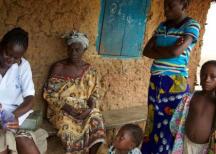
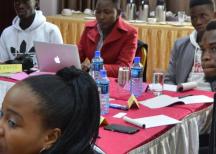
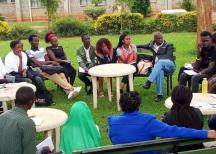
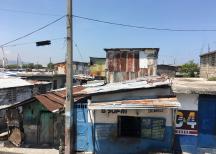
In order to support the Committee’s work, the World Organisation Against Torture (OMCT), together with the Centre for Minority Rights Development (Cemiride) and the Kenyan Section of the International Commission of Jurists (ICJ-Kenya), submitted an alternative report to the Committee focusing on the link between the violation of economic, social and cultural rights and the incidence of violence, including torture, in Kenya. This report was produced following a preparatory mission during which staff from these organisations met with minority and indigenous communities in the Rift Valley and residents of informal settlements in Nairobi in order to document their concerns and bring them before the Committee.
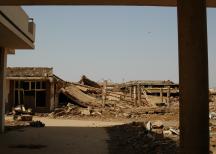
OMCT, Cemiride and ICJ-Kenya warmly welcome the concluding observations and recommendations of the Committee, which reflect many of the concerns expressed and measures proposed in their alternative report. In particular, the Committee notes that, “disparities in the enjoyment of economic, social and cultural rights, including access to land, have led to inter-ethnic tensions and post-election violence during which as least 1,500 persons were killed in early 2008”, and issues a comprehensive recommendation that brings together a number of measures crucial for resolving land-based conflict in Kenya. Specifically, the Committee calls upon the State party to: address disparities in the enjoyment of economic, social and cultural rights, including in access to land, which particularly affect poor people in urban areas and minority and indigenous communities in rural areas, e.g. by adopting the Draft National Land Policy, establishing land inspectorates to monitor discriminatory allocation of land, and implementing the recommendations of the Ndung’u Commission of Inquiry into Illegal/Irregular Allocation of Public Land. It also recommends that the State party establish a tribunal on post-election violence to bring perpetrators to justice, as well as a Truth, Justice and Reconciliation Commission to address broader historical injustices, and that it foster dialogue and promote comprehensive reconciliation among its different ethnic groups.
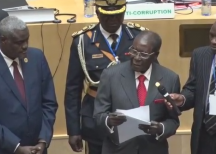
Another key issue raised by OMCT, Cemiride and ICJ-Kenya, and in turn highlighted by the Committee, is that of the, “corruption and patronage [that] still adversely affect the realization of economic, social and cultural rights”. The alternative report by OMCT and its partners underlines that corruption in Kenya- which exists on all levels, from the country’s political elite to local police and officials - goes hand in hand with inequality and violence. In its recommendations, the Committee calls on the State party to:
Intensify its efforts to prosecute cases of corruption […] train the police and other law enforcement officers, prosecutors and judges on the strict application of anti-corruption laws, conduct awareness-raising campaigns, and ensure the transparency of the conduct of public authorities, in law and in practice.”
The Committee also developed a number of recommendations regarding the new Constitution of Kenya, all of which are fundamental for reducing levels of violence. These range from the general recommendation to incorporate economic, social and cultural rights into the new constitutional draft, to a number of more specific recommendations, including that the new Constitution guarantee equal rights of women to matrimonial property during marriage and at its dissolution – an important measure to reduce women’s vulnerability to violence, particularly domestic violence. The Committee in addition recommends that the new Constitution include a provision to ensure that evictions are only used as a last resort and that the Government adopt legislation or guidelines, “strictly defining the circumstances under which evictions must take place”.
Other issues raised by OMCT, Cemiride and ICJ-Kenya and reflected in the recommendations of the Committee include harmful traditional practices, trafficking in women and children, child labour - in particular child sexual exploitation - the challenges facing children affected by HIV/AIDS, and lack of legislation specifically criminalizing domestic violence, including spousal rape. The Committee also expressed its concern regarding access to the minimum essential food and water in both rural and urban areas – issues that lie at the heart of much inter-community conflict in Kenya.
OMCT and its partners urge Kenyan civil society to grasp the important opportunity represented by the Committee’s recommendations. They call on NGOs to advocate vigorously with the Government of Kenya to ensure that it disseminates these recommendations widely – in English, Kiswahili and other appropriate languages – and, above all, to make certain that it acts on these recommendations. Doing so will not only promote the enjoyment of economic, social and cultural rights in Kenya, but also ensure that violence and conflict are less present in the daily lives of Kenyans, including the poorest and most vulnerable.
The report prepared by OMCT, Cemiride and ICJ-Kenya is entitled, “The Lie of the Land. Addressing the Economic, Social and Cultural Root Causes of Torture and Other Forms of Violence in Kenya”. It can be downloaded at:
http://www.omct.org/pdf/ESCR/2008/CESCR_kenya_OMCT_alt_report.pdf
The Concluding Observations of the Committee on Economic, Social and Cultural Rights following the initial report of Kenya (advanced unedited version) are available at:
http://www2.ohchr.org/english/bodies/cescr/docs/E.C.12.KEN.CO.1_EN.pdf
- Log in to post comments
- 550 reads
Author

Anonymous (not verified)