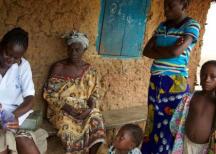







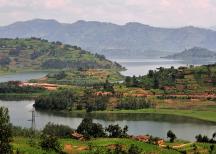




Andrew Adam is 12 years old, and a fisherman by trade. In Malawi’s southern district of Zomba, Lake Chilwa is the lifeblood of its villagers. Since Adam left school more than a year ago, he has been working as a bila boy – a worker who dives underwater and pulls the nets in.
It’s a dangerous profession, but Dinnes Whispah, a fisherman who maintains he doesn’t employ children, also says, “Going to the lake at a young age is like going to school and learning a trade… the figures have been reducing in the past two years, but you can still find some children coming to the lake on their own for profit.”
But MacBain Mkandawire, executive director of Youth Net and Counselling (Yoneco), says young Adam is just one of thousands being employed in Lake Chilwa’s fishing industry.
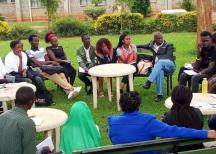
Yoneco is the on-the-ground monitor for the United Nations (UN) Right to Development Programme in the area. The Malawian child rights organisation is tasked with training community-based educators and village rights committees – an initiative that aims to inform locals of practices that are infringing on their human rights.
The same format for child labour monitoring has been implemented in Tanzania by International Programme on the Elimination of Child Labour (IPEC), and highlighted as good practice in a May 2010 report.
“Child labour is impinging on the right to development,” he says. “By not making children go to school, we are perpetuating poverty.”
He says while groups such as his are making piecemeal progress, poverty affecting Malawi’s largely rural population (84.7% of the country’s 13.1 million people) remains education’s main barrier and child labour’s biggest determinant.
A Plan International report, “Hard Work, Long Hours and Little Pay” found Malawi represents the highest incidence of child labour in southern Africa, with 88.9% of children between the ages of 5 and 14 working in its agricultural sector.
Children’s work ranges from helping out on a family plot after school to full time employment on tobacco plantations.
The Malawi government ratified the UN conventions on the rights of the child in 1991, and recently enacted the Child Care, Protection and Justice Bill, which increases the minimum working age to 18. Previously, Malawi legislation only protected children between the ages of 14 and 18 from hazardous work.
However, like much new legislation around the MDGs, there is limited capacity for enforcement.
As a full-time fisherman, Adam seems resigned to his fate; he is currently unable to afford secondary school and the nearest one is 20 kilometres away.
“If I had the choice, I would go to school,” he says. “I just need to make money.”
By the time the deadline for the UN Millennium Development Goals (MDGs) is up in five years, Malawi will have been offering its children free primary education for more than two decades.
Of the UN’s eight MDG platforms for 2015, Malawi has been a leader on this front in Africa’s southern region – the first of Tanzania, Zambia or Uganda to meet the universal standard.
Upon ushering in free primary education alongside a multiparty democracy in 1994, enrolment rates in the country skyrocketed, from 1.9 to 3.2 million. But an overwhelmed system faced teacher shortages and a lack of resources the government hadn’t accounted for – a common side effect of “access shock.”
The United States Agency for International Development (USAID) says sub-Saharan Africa will need more than 1,361,000 new teachers between 2000 and 2015 to meet the new demands of free primary education.
And the inevitable drop-off of enrolment once students complete primary school is already underway. The UN Children’s Fund (UNICEF) numbers show that while net primary school enrolment ratio is at 84 for males and 90 for females between 2003 and 2008, these numbers drop to 25 and 23 respectively at the secondary level.
While legislation is undoubtedly the first step towards achieving the MDGs, breaking the cycle of poverty will require more dedication to enforcement and changing ingrained practices says Mkandawire.
Otherwise, like Adam, a new generation of Malawian teens is at risk of being stuck in legislation limbo, forced to wait for the next set of international goals to advance beyond primary education.
* Philippa Croome is a media trainer based in Malawi with Journalists for Human Rights (jhr). This article is part of the GL Opinion and Commentary Service.
- Log in to post comments
- 367 reads
Author

Anonymous (not verified)