















In this week's Pambazuka News, Tafadzwa Thelma Madondo writes about last year's xenophobic attacks in South Africa and their dramatic consequences for foreign women and children. Madondo argues that the government did not do enough to protect the most vulnerable to violence and that more has to be done to guarantee everyone’s safety in South Africa in the future.
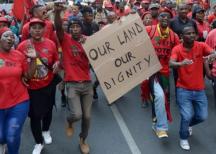
South African citizens in township areas recently demonstrated for the government to improve their living conditions in relation to water, sanitation and housing. Once again, these demonstrations led to a resurgence of xenophobia in South Africa. Reports from the Sowetan newspaper show that threats were being made to foreign nationals living in the Western Cape and evidence suggests that there might be a reoccurrence of xenophobia.
Last year a similar demonstration triggered serious xenophobic attacks, which left 62 people dead and about 100,000 displaced from their homes. At the time, former President Thabo Mbeki apologised to the world for the xenophobic attacks. However, did this really have an impact on the angry and impatient South Africans seeking the government’s attention?
Numerous human rights violations arose from these attacks, such as an infringement on the right to safety for foreign nationals, refugees and South African citizens living in the township areas, where they are exposed to violence and crime. Innocent women and children living in these areas are more vulnerable to abuse and rape. During last year's attacks dozens of women were raped and more than 6,000 women and children were displaced from their homes.
During the xenophobic attacks women and children were unable to protect themselves, being denied their human rights as their lives were being stolen through the threat of violence. This traumatic experience was a clear example of domestic violence as defined by Section 1 (viii) of the 1998 Domestic Violence Act. The definition is broad and encompasses acts that include physical abuse, sexual abuse, emotional and verbal abuse, intimidation, harassment, damage to property and entry into one’s residence without consent. All of the above were a reality during the attacks and the people who were responsible for such violations were never charged for their crimes.
The children who were victims suffered both psychologically and physically by being traumatically displaced from their homes, witnessing other humans burnt alive or being beaten up severely and as a result of the police shooting rubber bullets and tear gas everywhere. Not only does this affect their psychological and physical health but it also infringes on children’s rights to safety. International conventions advocate the protection of children’s rights. Article 16 of the Convention on the Rights of the Child states that:
‘1. No child shall be subjected to arbitrary or unlawful interference with his or her privacy, family, home or correspondence, nor to unlawful attacks on his or her honour and reputation.
2. The child has the right to the protection of the law against such interference or attacks.’
Interpreting Article 16 and looking at the previous xenophobic experience, the children’s rights to privacy were violated as most of them and their families were unlawfully attacked and made to flee their homes. They had to go through the pain of losing their belongings and not being able to locate their family members during the rampage. After reading Article 16 one would say that, the government had the duty to protect these children from this devastating déjà vu before its occurrence. They had to make sure that the children were placed in safer locations before the attacks became severe in order to protect them from the violence.
According to Article 22 of the Convention on the Rights of the Child, government and state parties have the duty to protect the rights of children seeking refugee status. It states that:
‘State parties shall take appropriate measures to ensure that a child who is seeking refugee status or who is considered a refugee according to law receives appropriate protection and humanitarian assistance in the enjoyment of applicable rights…’
One could say that the government of South Africa responded to this duty by providing camps for the displaced children and their parents, although this was not adequate to cater for their basic needs and protection. The government camps were later closed and the families had to find alternative solutions. For the foreign citizens (including children) the choice was either to go back to their home countries or live in the streets as they had lost all their belongings. The South Africa in which they had sought refuge was not a safe haven anymore.
If this xenophobic tragedy is to re-occur in South Africa, protection measures have to be set in advance to protect the innocent women and children who are victimised through such situations. The Centre for the Study of Violence and Reconciliation (CSVR) conducted a study which focused on the gendered nature of xenophobia in South Africa and the impact of such xenophobia on migrant women. Their findings showed that women are more vulnerable to xenophobic abuse due to issues of identification documents and the resulting difficulties in accessing the criminal justice system as they are not accorded the rights to report such incidences to the police. Recommendations were set forth in the study, including foreign and migrant representatives in community structures enabling access to decision-making bodies, informing migrant women on how to access public services, educating society about different cultures and acceptance of foreigners and creating a transparent complaint process for the Department of Home Affairs and public hospitals. It is important for state parties and the government to consider these recommendations in order to achieve a free and fair South Africa where everyone is protected from violence.
BROUGHT TO YOU BY PAMBAZUKA NEWS
* Please send comments to [email protected] or comment online at Pambazuka News.
REFERENCES
http://news.bbc.co.uk/2/hi/africa/8163187.stm
Beeby N, Double Jeopardy: Female and Foreign in South Africa 3 June 2009 http://www.refugeeministriescentre.org.za/double_jeopardy.htm
Centre for the Study of Violence and Reconciliation (CSVR) Report shows women migrants continue to live in fear 5 June 2009 http://www.csvr.org.za/index.php?option=com_content&task=view&id=1109&Itemid=21
Convention on the Rights of the Child 2 September 1990
Domestic Violence Act , 1998
Majavu A, Traders threatened Sowetan News 29 May 2009 http://www.sowetan.co.za/News/Article.aspx?id=1008791
Plus News, South Africa: Act II of xenophobia waiting in the wings 14 August 2009 http://www.plusnews.org/Report.aspx?ReportId=83444
UNICEF, Domestic Violence against women and girls, Innocenti Digest No. 6 June 2000
- Log in to post comments
- 15972 reads
Author

Anonymous (not verified)