







Friends of Pambazuka

Finance and Operations Director - Fahamu

Fahamu is seeking an experienced Finance and Operations Director to manage the organisation's finance and operations team.
This role will be based in Nairobi, Kenya but will have a remit covering the whole of Fahamu's pan-African programmes with offices in Kenya, Senegal, South Africa and UK.
The deadline for applications is February 10, 2012.

Download job description (Word)
Download application form (Word)

Dust From Our Eyes cover Dust From Our Eyes
An Unblinkered Look at Africa
Joan Baxter

Joan Baxter eloquently exposes the diversity of Africa, the injustices Africans have faced and the strengths that have helped them weather adversity. She erodes the tired stereotypes of the western media and provides compelling evidence of the need for westerners to scrutinise their own countries' policies at home and abroad.

Buy now from Pambazuka Press

Latest titles from Pambazuka Press

From Citizen to Refugee

From Citizen to Refugee Uganda Asians come to Britain
Mahmood Mamdani
'On the face of it, life in the camp presented a sharp and favourable contrast to the open terror of living in Uganda. But it was the Kensington camp, and not Amin's Uganda, which was my first experience of what it would be like to live in a totalitarian society.' Mahmood Mamdani
Buy now

African Awakening

African Awakening The Emerging Revolutions
The tumultuous uprisings in Tunisia, Egypt and Libya have seized the attention of media but what about the rest of Africa? With incisive contributions from across the continent, "African Awakening" presents the 2011 uprisings in their African context.
Buy now

Demystifying Aid

Yash Tandon

Demystifying Aid This pamphlet from Pambazuka Press shows that 'development aid' is not what it purports to be - the effects of actions of well-meaning allies in the North who support aid to Africa for reasons of ethics or solidarity are, unfortunately, the opposite of their good intentions.
Buy now

To Cook a Continent

To Cook a Continent Destructive Extraction and the Climate Crisis in Africa
Nnimmo Bassey
Exploiting Africa's resources has delivered huge profits to the North and huge damage to Africa's environment and economies. Overcoming the crises of environment and climate change means also addressing corporate profiteering and resource extraction.
Buy now

Earth Grab

Earth Grab Geopiracy, the New Biomassters and Capturing Climate Genes
Diana Bronson, Hope Shand, Jim Thomas, Kathy Jo Wetter
As greedy eyes focus on the global South's resources this book 'pulls back the curtain on disturbing technological and corporate trends that are already reshaping our world and that will become crucial battlegrounds for civil society in the years ahead.
Buy now

Pambazuka News Broadcasts

Pambazuka broadcasts feature audio and video content with cutting edge commentary and debate from social justice movements across the continent.

See the list of episodes.

AU MONITOR

This site has been established by Fahamu to provide regular feedback to African civil society organisations on what is happening with the African Union.

Perspectives on Emerging Powers in Africa: December 2011 newsletter

Deborah Brautigam provides an overview and description of China's development finance to Africa. "Looking at the nature of Chinese development aid - and non-aid - to Africa provides insights into China's strategic approach to outward investment and economic diplomacy, even if exact figures and strategies are not easily ascertained", she states as she describes China's provision of grants, zero-interest loans and concessional loans. Pambazuka Press recently released a publication titled India in Africa: Changing Geographies of Power, and Oliver Stuenkel provides his review of the book.
The December edition available here.

The 2010 issues: September, October, November, December, and the 2011 issues: January, February, March , April, May , June , July , August , September, October and November issues are all available for download.

Creative Commons License
This work is licensed under a Creative Commons Attribution-Noncommercial-No Derivative Works 3.0 Unported License.

Comment & analysis

The problem with polarising the debate on genocide

Oliver Kearns

2010-07-08, Issue 489

http://pambazuka.org/en/category/comment/65782

Bookmark and Share

Printer friendly version


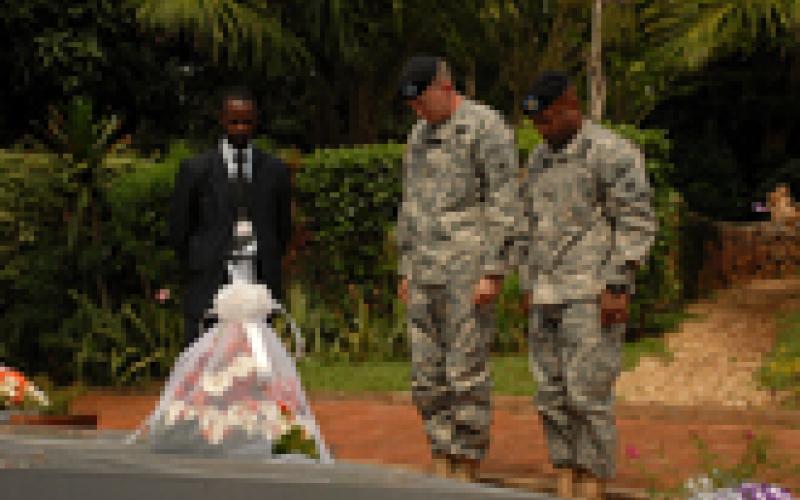
cc US Army Africa
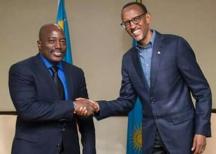
‘Gerald Caplan is right to outline various deficiencies of Edward Herman and David Peterson’s chapter on Rwanda in their new book 'The Politics of Genocide'. In important ways, however, Caplan’s review piece actually contributes to the very phenomenon he is trying to attack,’ writes Oliver Kearns.

Gerald Caplan is right to outline various deficiencies of Edward Herman and David Peterson’s chapter on Rwanda in their new book ‘The Politics of Genocide’. In important ways, however, Caplan’s review piece actually contributes to the very phenomenon he is trying to attack. Caplan’s framing of the debate over the violence in Rwanda in 1994 arguably encourages a further polarisation of that debate, making it easier for genocide deniers to make their case.

The problem with Caplan’s framing is its characterisation of both ‘sides’ of the debate. On one side are ‘the overwhelming number of those who have ever written about the genocide’. Caplan portrays this overwhelming number as holding a more unified view of the 1994 killings than actually exists. For instance, Caplan rejects Herman and Peterson’s contention that the Rwandan Patriotic Front (RPF) ‘were perceived as serving US interests’, arguing that ‘[n]o other historian of the genocide of whom I’m aware makes this claim and no evidence for it exists’. In fact much has been written of the diplomatic support given to the RPF by the United States. Barrie Collins has documented the role of the US in pressuring President Habyarimana throughout the 1990s, often with the threat of withdrawal of international funds, to treat the RPF as a legitimate opposition movement and to concede to its demands. As Collins notes, the fact that the invasion of Rwanda by the RPF was not condemned by the ‘international community’ did indeed lead to a perception in the Rwandan government that ‘the RPF enjoyed discreet American approval’.[1]

Arguably more problematic in terms of furthering our understanding of the 1994 violence is Caplan’s characterisation of the other side of the debate. Caplan labels a number of scholars, lawyers and journalists as genocide deniers, who back up their arguments by ‘gleefully drink[ing] each other’s putrid bath water’. Included within this grouping are Allan Stam and Christian Davenport, the latter a professor of Peace Studies at the University of Notre Dame. Davenport and Stam have compiled data on killings from April-June 1994 from a wide range of sources, including Rwandan ministries, survivors associations and human rights organisations. They estimate that while around 890,000 killings occurred in areas under the jurisdiction of the FAR (Rwandan Armed Forces), there were also 77,000 killings in areas under RPF jurisdiction. Caplan is right to note the controversy that this research has ignited – members of the research team in question have been interrogated and threatened by the Rwandan government. To brand Davenport and Stam genocide deniers, however, is quite inaccurate. To quote their research paper: ‘[c]learly evidence of genocide is evident within this analysis but it is also clear that a variety of other activities exist as well, which merit discussion and consideration within journalistic, scholarly, legal and political circles’.[2] As the two have noted elsewhere, ‘we have never denied that a genocide took place; we just noted that genocide was only one among several forms of violence that occurred at the time’.[3]

Caplan’s more specific source of outrage at Davenport and Stam is their ‘sensational estimate’ that ‘the majority of victims [were] likely Hutu and not Tutsi’. Caplan says the methodology used to arrive at this ‘Orwellian assertion’ has been ‘totally discredited’. Unfortunately Caplan does not provide any source to back this up. It is true that one could level criticisms at aspects of their Davenport and Stam’s methodology. Their claim that the majority of victims were likely Hutu is derived from subtracting the estimated number of Tutsi survivors from 1991 census data on the number of Tutsi in Rwanda. It is likely, however, that in the 1991 census the number of Tutsi was under-reported by both the Habyarimana regime and by Tutsi themselves, perhaps by as much as 40 per cent.[4] Nevertheless, in light of the fact that previous scholarly estimates have estimated the numbers of Hutu and Tutsi deaths to be much more even than the current Rwandan government’s estimate, Caplan’s name-calling with regards to Davenport and Stam and their ‘Orwellian’ estimates has arguably little merit.

We surely owe it to the victims of the violence of 1994 to develop as accurate and nuanced a picture as possible of what exactly took place during those terrible months. Gerald Caplan’s arguments make this harder to achieve. By downplaying the diversity of opinion among those who accept a genocide was carried out aimed at the Tutsi population, and by denouncing those who draw attention to the diversity of modes of violence that existed in Rwanda throughout 1994, Caplan encourages a polarisation of discussion over Rwanda, as readers accept the parameters of the debate that he presents. This will only make it easier for those who do actually deny a genocide took place to characterise those who disagree as RPF or American imperialist stooges. Such a polarisation could also have damaging consequences for the viability of holding President Kagame and members of the RPF to account for their actions over the last two decades, both in Rwanda and in the Democratic Republic of Congo. Kagame’s government is only too happy to see the debate polarised, since this makes it much more difficult to ensure that all forms of violence – and, crucially, its perpetrators – are documented.

* Oliver Kearns is a fourth year undergraduate in international relations & philosophy at the University of St Andrews.
* Please send comments to editor@pambazuka.org or comment online at Pambazuka News.

NOTES

[1] Barrie Collins, “New Wars and Old Wars? The Lessons of Rwanda” in
David Chandler (ed.), Rethinking Human Rights: Critical Approaches to
International Politics (Palgrave Macmillan, 2003): 157-175, 163.
[2] Christian Davenport & Allan Stam, “Rwandan Political Violence in
Space and Time” Discussion paper, 2009,
http://web.mac.com/christiandavenport/iWeb/Site%2040/Publications_files/rwanda031708c.pdf:
36.
[3] Christian Davenport & Allan Stam, “What Really Happened in Rwanda?”
Miller-McCune Research Essay, 6 October 2009,
http://www.miller-mccune.com/politics/what-really-happened-in-rwanda-3432
[4] Marijke Verpoorten, “The death toll of the Rwandan genocide: a
detailed analysis for Gilkongoro Province” Population 60(4), 2005:
331-368.


Readers' Comments

Let your voice be heard. Comment on this article.


↑ back to top

ISSN 1753-6839 Pambazuka News English Edition http://www.pambazuka.org/en/

ISSN 1753-6847 Pambazuka News en Français http://www.pambazuka.org/fr/

ISSN 1757-6504 Pambazuka News em Português http://www.pambazuka.org/pt/

© 2009 Fahamu - http://www.fahamu.org/