


























The celebrated Kenyan writer reflects on how much India has been an important thread in his life and in the wider anti-colonial struggle in Africa, and calls for greater interaction between Africa, Asia and South America to escape the long shadow of the ‘Age of the European Empire’.
The links between Asia and Africa and South America have always been present but in our times they have been made invisible by the fact that Europe is still the central mediator of Afro-Asian-Latino discourse. We live under what Satya Mohanty in his interview in Frontline (April 2012), aptly calls the long intellectual shadow of the Age of European Empire.
In my case, I had always assumed that my intellectual and social formation was tied to England and Europe, with no meaningful connection to Asia and South America. There was a reason. I wrote in English. My literary heroes were English. Kenya being a British colony, I had learnt the geography and history of England as the central reference in my widening view of the world. Even our anti-colonial resistance assumed Europe as the point of contest; it was we, Africa, against them, Europe. I graduated from Makerere College in Uganda in 1964, with a degree in English; then went to the University of Leeds, England, for further studies, in English. Leeds was a meeting point of students from the Commonwealth: India, Pakistan, Australia, and the Caribbean. We saw each other through our experience of England. Our relationship to England, in admiration, resentment or both, was what established a shared space.
After I wrote my memoir of childhood, Dreams in a Time of War, published in 2006, I looked back and saw how much India had been an equally important thread in my life. I had not planned to bring out the Indian theme in my life: but there it was, staring at me right from the pages of my narrative. The thread starts from home, through school, college and after.
I did not grow up in a Christian home, but we celebrated Christmas, everybody did, it was a time of carnival, with children, in their very best, trooping from house to house to indulge their fancy in terms of food. We were vegetarians throughout the year, though not out of choice, and to many, Christmas day was the first time they would taste meat. For me Christmas meant the occasion for eating gĩtoero, a curried broth of potatoes, peas, beans, and occasionally a piece of lamb or chicken, but the centerpiece of the dishes was cabaci sometimes called mborota. Even today, Christmas and feasts in Kenya mean plentiful of cabaci, thambutha and mandathi, our version of the Indian chapati, paratha, samosa. The spices, curry, hot pepper and all, so very Indian, had become so central a part of Kenyan African cuisine that I could have sworn that these dishes were truly indigenous.
It was not just Christmas: daily hospitality in every Kenyan home means being treated to a mug of tea, literally a brew of tea leaves, tangawizi, and milk and sugar, made together, really a massala tea. Not to offer a passing guest or neighbor a cup of tea is the height of stinginess or poverty; and for the guest to decline the offer, the ultimate insult. So African it all seemed to me that when I saw Indians drinking tea or making curry, I thought it the result of African influence. Where the Indian impact on African food culture was all pervasive, there was hardly any equivalence from the English presence; baked white bread is the only contribution that readily comes to mind.
This is not surprising. Imported Indian skilled labor built the railway line from the Coast to the Great Lake, opening the interior for English settlement. Every railroad station, from Mombasa to Kisumu, initially depots for the building material, mushroomed into towns mainly because of the Indian traders who provided much needed services to the workers initially but in time, to the community around. If European settlers opened the land for large-scale farming for export, the Indian opened the towns and cities for retail and wholesale commerce.
Limuru where I come from had a thriving Indian shopping centre built on land curved from that of my maternal grandfather’s clan. The funeral pyres to burn the bodies of the Indian dead were held in a small forest that was also under my maternal grandfather’s care. Cremation is central to Hindu culture: it asks Agni, the fire god, to release the spirit from the Earthly body to be re-embodied in Heaven into a different form of being. The departed soul travelled from pretaloka to pitraloka unless there were impurities holding it back. My mother did not practice Hinduism, but to her dying day, she believed and swore that on some nights, she would see disembodied Indian spirits, like lit candles in the dark, wandering in the forest around the cremation place. She talked about it as a matter of regular material fact and she would become visibly upset when we doubted her.
It was not all harmony all the time. The Indian community kept to itself, there was hardly any social interaction between us, except across the counters at the shopping centre. Fights between African and Indian kids broke out, initiated by either side. The Indian dukawalla, an employer of Africans for domestic work and around the shops, was, more often than not, likely to hurl racially charged insults at his workers. Some of the insults entered African languages. One of the most insulting words in Gĩkũyũ was njangiri. A njangiri of a man meant one who was useless, rootless, like a stray dog. Njangiri came to Gĩkũyũ from Jangaal, the Sanskrit/Hindi word for wild: it would have been what the Indian employer was likely to call his domestic help. In the colonial times, in my area at least, I do not recall the tensions ever exploding into inter-communal violence,
The post-colonial scene presents a different picture. Time and again Indians and Indian owned stores have been targets of violence especially in times of crisis, mostly victims of looting. I am not sure if it’s the fact of their Indianness or the fact of their being a most visible part of the affluent middle class. In such a case the line between the racial and class resentment is thin. Different in that sense is the case of Idi Amin’s Uganda, where hundreds of Asians were expelled from a country that had been their home for almost a century. In both the colonial and post-colonial era, social segregation, forced in the case of the colonial era, or a consequence of habit and history, has exacerbated tensions.
The colonial school system segregated Asian, European and African from each other and it was not until Makerere College that I had social interaction with Indians. Makerere was an affiliate of the University of London in Kampala, Uganda, where, until the advent of Idi Amin, racial relations were benign. Before its college status, Makerere used to be a place of post-secondary schooling for African students from British East Africa, but as Independence approached, the college opened its doors to a sizeable Indian student presence. That is when we started learning about each other’s different ways of life on a more personal basis. We shared dorms, classes, and the struggles for student leadership in college politics and sports. Leadership emerged from any of the multi-ethnic and multi-racial mix. Doing things together is the best teacher of race relations: one can see and appreciate the real human person behind the racial and ethnic stereotypes.
The lead role of an African woman in my drama, The Black Hermit, the first major play ever in English by an East African black native, was an Indian. No make up, just a headscarf and a kanga shawl on her long dress but Suzie Wooman played the African mother to perfection, her act generating a standing ovation lasting into minutes. I dedicated my first novel, Weep Not Child, to my Indian classmate, Jasbir Kalsi, probably as homage to our friendly but fierce intellectual rivalry in our English studies. Ghulsa Nensi led a multi-ethnic team that made the costumes for the play while Bahadur Tejani led the team that raised money for the production.
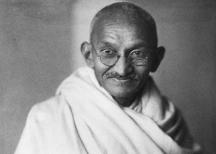
It was not simply at the personal realm. Commerce, arts, crafts, medical and legal professions in Kenya have the marks of the Indian genius all over them. Politics too, and it should never be forgotten that Mahatma Gandhi started and honed his political and organizing skills in South Africa where he spent 21 years of his life from 1893, leaving for India in 1914. The South African scholar, Masilela Ntongela, places Gandhi squarely as one of the founding intellectuals of what Masilela calls the New African Movement. The honorific Mahatma, the great soul, was first applied to him in South Africa for by the time he left for India, he had already developed his Satyagraha and Ahimsa ready for use in his anti-colonial struggles that eventually led to Indian independence in 1947, an event that had a big impact on anti-colonial struggles in Africa. What India achieved could be realized in Africa! Gandhi kept in touch with politics in Africa, Kenya in particular, and wrote a letter of protest when the British imprisoned one of the early Kenyan nationalists, Harry Thuku, in the 1920s. Gandhi created the tradition of South African Asians at the front line of struggle in South Africa. Ahmed Kathrada was one of the ten defendants in the famous Rivonia trial that would lead him to Robben Island where he spent 18 years alongside Mandela and others. What Gandhi started Mandela completed. When I met Mandela in Johannesburg soon after his release and becoming President of the ANC party, I came out from the hour-long one on one conversation, struck by the charisma of his simplicity, reminiscent of what people say about Gandhi.
The birth of Trade Union Movement in Kenya was largely the work of Gamal Pinto and Makhan Singh. Imprisoned by the Kenya colonial authorities repeatedly, Makhan Singh would never give up the task of bringing Indian and African workers together. He was the first prominent political leader to stand in a court of law and tell the British colonial state that Africans were ready to govern themselves, a heresy that earned him imprisonment and internal exile. Kapenguria is usually associated with the trial and imprisonment of Jomo Kenyatta but Makhan Singh preceded him. There have been some Indian political martyrs, the first being the Indian workers executed for treason, by the authorities in the very early days of colonial occupation. Gamal Pinto, a hero of the anti-colonial resistance, would be a prominent victim of the post-colonial negative turn in Kenyan politics. Though under a fictional name, Gamal Pinto, has been immortalized in Peter Nazareth’s novel, In a Brown Mantle one of the best literary articulations of the political drama of the transformation of African politics from the colonial to the neo-colonial.
The recent explosion of Chinese interest in African might obscure the fact that there has always been a small but significant migrant Chinese presence, in South Africa mostly, but also in Zimbabwe. Fay Chung whose grandparents migrated to Rhodesia in the 1920s became an active participant in the anti-colonial struggle, at one time running for her life into exile in Tanzania, was a big player in the founding of Zimbabwe. She founded Zimfep which invited Kamĩrĩthũ theater to Zimbabwe, a visit was scuttled by the Moi regime by simply banning the theater group and forcing one of its leaders, the late Ngũgĩ wa Mĩriĩ, to flee to Zimbabwe, and under Zimfep, launched the Zimbabwe community theatre movement1 ensuring that the continuity and expansion of the Kamĩrĩthũ spirit.
Mao Tse Tung never visited Africa but his thought has been part of the intellectual debate in the post-colonial era. His class analysis of Chinese society was seen as providing a more relevant model for analyzing African post-colonial social realities than the European Marxist model, and Kwame Nkrumah’s book, Class Struggle in Africa, has the Mao’s marks all over it. The notion of the Comprador bourgeoisie dependent and serving foreign capital and hence contrastable from the national bourgeoisie with its primary reliance on national capital has become an analytic model in political theory and development studies.
The intellectual history of the continent would be the poorer without the journal, Transition, now based in Harvard, but founded by Rajat Neogy way back in 1962. Neogy, a brilliant and creative editor, was Ugandan born and educated: he believed in the multi-cultural and multifaceted character of ideas, and he wanted to provide a space where different ides could meet, clash, and mutually illuminate. Transition became the intellectual forum of the New East Africa, and indeed Africa, the first publisher of some of the leading intellectuals in the continent, including Wole Soyinka, Ali Mazrui and Peter Nazareth. Transition published my short story, The Return, a turning point in my literary life. The story that captured what would later become so central a part of my aesthetic explorations in my novels, principally A Grain of Wheat et al, was the sole basis of my inclusion in the 1962 conference of African writers of English expression.
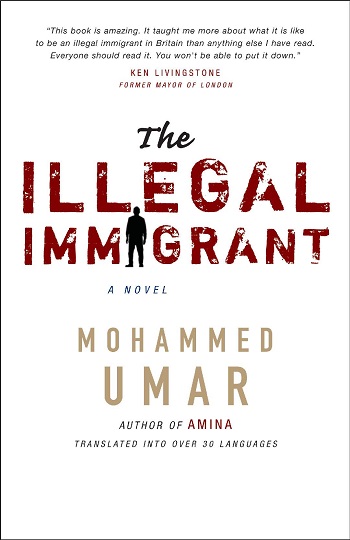
Peter Nazareth and Bahadur Tejani, early contributors to Transition would later set the tradition of Afro-Indian writing with their novels, a tradition taken to new heights by Moyez G Vassanji. More than even black African writers, these three have been among those who have explored extensively and intensively the often problematic African-Indian relations. My own work, Wizard of the Crow, published in 2006, in which I tried to bring in Eastern philosophies into imaginative discourse with African realities was following in the footprints already made by these writers on the sands of the cultural scene in Africa.
It may be argued that in the specific cases of East and South Africa where there has always been a sizeable Asian immigrant presence, Afro-Asian dialogue was inevitable. But, in general, Africa and Asia, have met through the political entities like the Bandung conference; the non-alignment movement; the Afro-Asian Peoples Solidarity Organization; and at the intellectual practice, the long years of the Afro-Asian writers movement which staged conferences in various capitals of Asia and Africa.
I have always felt the need for Africa, Asia and South America to learn from each other. This South-to-South intellectual and literary exchange was at the centre of the Nairobi Literature debate in the early 1960s, and is the centrepiece of my recent theoretical explorations, in Globalectics: Theory and the Politics of Knowing. The debate brought about a literature syllabus that centred the study of Indian/Asian, Caribbean, African-American and South American writers alongside those of the European tradition. The result was not to the liking of the neo-colonial regime in Kenya who accused me and my colleagues of replacing Shakespeare with Marxist revolutionaries from Asia, the Caribbean, Afro-America and Latin America, among them being Lu Xun, Kim Chi Ha, VS Naipaul, George Lamming, Kamau Brathwaite, CLR James, Alejo Carpentier, Richard Wright, and Ralph Ellison. Shakespeare was of course safe but we had committed the crime of placing him among other writers and changing the name of the department from English to Literature, which we thought the more appropriate designation of the study of literature without borders.
As the editor of the Gĩkũyũ language journal Mutiiri, I have published the Gĩkũyũ translations of some of the poetry of Ariel Dorfman and Otto Rene Castillo. Professor Gĩtahi who did the translations directly from Spanish into Gĩkũyũ did his doctoral work on the Latin American literature. Gĩtahi was a product of the literature syllabus of the reorganised literature department of Nairobi University. His translation has facilitated direct Spanish-Gĩkũyũ language conversation.
I would like to publish numerous translations from the languages of Asia and South America and you can call this a challenge to African, South American and Asian translators. More important I would like to see similar efforts at enabling conversations between African, Asian and South American languages. This also calls for new category of literary scholars who have studied a combination of languages from Asia, Africa and South America.
It is time to make the invisible visible in order to create a more interesting - and ultimately more creative and meaningful - free flow of ideas in the world. Satya Mohanty is quite right when he points out that: ‘One of the many advantages of the present moment is that the long intellectual shadow of the Age of European Empire seems to be receding a bit, and we have remarkable opportunities to work across cultures to learn from one another.’
Mohanty’s call for cultural interaction and interchange across borders - beyond the Eurocentric campus and our current notions of Comparative Literature - echoes in a forceful way and fresh manner the vision assumed and contained in the call for the abolition of the English Department made in Nairobi in 1969, the first steps in what would later become post-colonial theories and studies. Mohanty’s call for cross-regional comparative literary studies is a necessary and timely intervention on the path towards a genuine world literature.
This essay by the eminent writer Ngugi wa Thiong’o was inspired by the interview with Satya P. Mohanty, ‘Literature to Combat Chauvinism’, published in Frontline in April2. It was written for the new ‘Global South Cultural Dialogue Project’ that has been initiated by writers and scholars from the global South, in particular Mukoma Wa Ngugi (Kenya, USA) and Prafulla Kar (India).
* BROUGHT TO YOU BY PAMBAZUKA NEWS
* Please do not take Pambazuka for granted! Become a Friend of Pambazuka and make a donation NOW to help keep Pambazuka FREE and INDEPENDENT!
* Ngugi wa Thiong'o, Distinguished Professor of English and Comparative Literature at the University of California, Irvine, is the author of numerous books of fiction and theory including Wizard of the Crow and Globalectics.
* Please send comments to editor[at]pambazuka[dot]org or comment online at Pambazuka News.
END NOTES
1. It’s the subject of a book by L. Dale Byam, Community in Motion: Theatre for Development in Africa.
2. ‘Literature to combat cultural chauvinism’, Frontline, Volume 29, Issue 06, 2012
- Log in to post comments
- 3358 reads
Author

Anonymous (not verified)