













Reflecting on the anniversary of the Soweto uprising, ‘lovers of liberty everywhere continue to be inspired by the generations of freedom fighters and the youth who sacrificed to change Africa’, writes Horace Campbell. Although the romance with the old liberation forces is coming to an end, says Campbell, ‘there are renewed energies for substantive change all across Africa’, and it ‘is on the cultural front where the explosive energies are most manifest’.
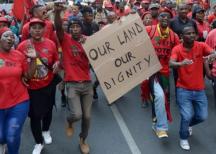
Today is 16 June 2010, 34 years after the youths of Soweto stood their ground and gave leadership to the struggles against apartheid. Their prolonged and popular struggles developed new techniques and strategies for revolutionary change in Africa. These struggles gave rise to an alliance of progressive forces in a mass democratic movement, embracing workers, students, progressive preachers, cultural workers, freedom fighters and professional liberation forces. When this alliance promised to fully radicalise the society, a compromise emanating from negotiations transferred power from the apartheid rulers to a section of the liberation movement led by the African National Congress.
The crisis of leadership and vision within the top echelons of the ruling party in South Africa is forcing a new understanding of the meaning of liberation. From Namibia to South Africa and from Uganda to Zimbabwe, those who had identified with the struggles for change 30 years ago have become obstacles for the transformation of Africa. Yet, while the leaders of yesterday provide the international media with materials for the pathological description of the conditions of the African peoples, lovers of liberty everywhere continue to be inspired by the generations of freedom fighters and the youth who sacrificed to change Africa. Thirty-four years after the Soweto uprising and 16 years after the formal end of apartheid rule, the political leaders celebrate a national holiday without the kind of public education that can teach the positive lessons of self-mobilisation and self-organisation that arose within the youth when the ANC was still floundering in exile.
The end of the romance with the old liberation forces is taking place at the same moment when there are renewed energies for substantive change all across Africa. It is on the cultural front where the explosive energies are most manifest. Films, music, dance, theatre, sports and other forms of self-expression abound as the old is giving way to the new. A culture of life, living and search for a better quality of life forces itself from the spirit of the people. Songs of unity and freedom take centre stage and the commercial companies now promote a united Africa hoping to catch up with the sentiments on the ground in Africa. Not to be left behind, organs such as the Economic Community of West African States (ECOWAS) now promotes the Economic Community of West African peoples. Inside Nigeria, a booming film industry is caught between the old ways of division and the new road of creativity and social peace.
ENERGY AND CULTURAL EXPRESSIONS
No communication from Africa this week can avoid the spectacle of the World Cup now taking place in South Africa. Six teams from the continent of Africa are competing in this marathon event and the expressions of Pan African unity come out from far beyond the borders of the African teams that are competing (Algeria, Cameroon, Cote d‘Ivoire, Ghana, Nigeria and South Africa). Flags, banners, billboards and other reminders of this event are to be seen in all parts of Africa, especially in those societies represented in the tournament.
I was in Abuja when the opening ceremonies were being beamed from South Africa. The ceremony along with the opening game had attracted billions of spectators and one could see many rushing early from the mosques on Friday to go to watch the opening game between South Africa and Mexico. A major cultural event was binding Christians and Muslims, believers and non-believers into a communion with the youth who were competing to make Africa proud. In societies such as Ghana and South Africa, there is so much exuberance that the energy levels of the societies are elevated. Travelling between Abuja and Accra on the third day of the tournament, one could see the differences between the Ghanaian support for the Black Stars (Ghana national team) and the reserved and subdued support in Nigeria for the national team, the Super Eagles.
The Black Stars exude such speed, confidence and skill that many commentators and lay persons place high hopes on the performance of Africa, especially Ghana. In Nigeria, opposition and impatience with the ruling political cabal could not be separated from the management (or some would say mismanagement) of the national team.
The sophisticated and calculated posture of the Nigerian youth exposes the political maturity of a society that is coming out of militarised trauma. After decades of divisions and diversions, the youth have put the leadership on notice that the numerous obstacles being fashioned in the forms of religious, ethnic and regional divisions will not protect the rulers from popular organisation for change. Thieves, sharks and other names are heaped on the rulers who have distinguished themselves in the crudest forms of primitive accumulation of capital. Moralists bemoan this form of plunder and vow to stamp out corruption without reference to the fact that this form of capital accumulation is not unique to Nigeria. What is striking is the reality that in the 21st century, this corruption is so crude and callous that the Nigerian capitalist class cannot provide basic utilities and services such as electricity, clean running water and internet services. ICT providers have exploded in the society and the cell phone business is booming. But with vast profits and skyrocketing costs, this same ICT sector points to the fault lines; while some youths complain about high charges, others are seeking new ways to organise to make their voices heard.
So deep is the oppression in all areas of life in Nigeria that the society has reached (what one magazine calls) ’a crossroad.’ The turning point away from fear and insecurity is felt in all areas of life. Youths are on the move. The military are exhausted and have sent a signal that they will not be the oppressors for the foreign and local looters. This message came through in the transition from the comatose Presidency of Umaru Yar A’dua to the new President Goodluck Jonathan. Those who organised against the military dictatorship of Babingida, Abacha and the democratic authoritarianism of Obasanjo are not waiting for luck. They are organising for substantive changes. These forces have their own story of anti democratic struggles and are learning the lessons of the betrayals of those who sacrificed their lives in Soweto and in Zimbabwe.
Capitalism has failed in Africa. As the international crisis of capitalism deepens, the struggles for change and transformation to a new mode of economic organisation abound and come through clearly. The challenges of our period open up opportunities for rethinking the basic concepts around which we organise. In this sense, it is also an exciting moment for humanity.
Cultural struggles – whether in the movies, in the areas of education or in film and sports – generate new excitement. This excitement is generated by the transition in new modes of thinking. There are now new modes of organising life and the transition beyond the old forms of production and consumption are being forced on us by the reality of global warming.
The question is whether our conceptions of life will be more important in facilitating forms of human organisation or whether the modes of destruction will envelop us. This is but one of the many challenges before us. In this enterprise the bankers and the oil conglomerates are assisting the clarification of the new tasks by their blind arrogance.
BROUGHT TO YOU BY PAMBAZUKA NEWS
* Horace Campbell is a peace activist who is working to realise the dream of the late Tajudeen Abdul-Raheem of building African unity by 2015.
* Please send comments to [email protected] or comment online at Pambazuka News.
- Log in to post comments
- 1818 reads
Author

Anonymous (not verified)